
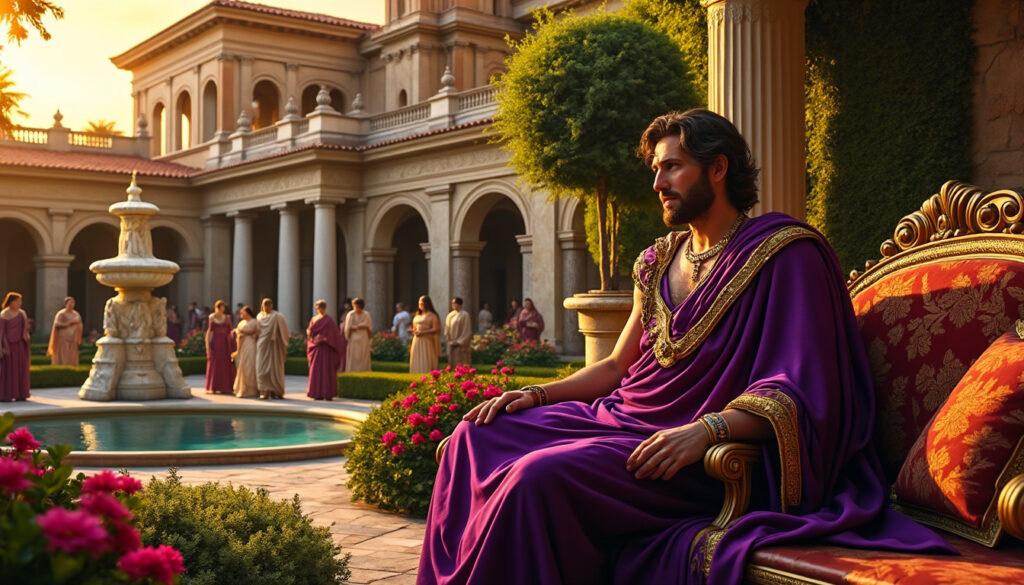
In a daring move, Tamasa reintroduces a masterpiece of Italian comedy with “The Weekends of Nero,” directed by the talented yet often underestimated Steno. This funny and quirky film propels us back to Roman times, exploring the chaotic reign of the famous Emperor Nero. Through a unique blend of parody and commedia dell’arte, Steno paints an unexpected portrait of a narcissistic despot, paying homage to a historical moment while infusing a dose of macabre and biting humor.
An Unexpected Comedy under Nero
In a recent exploration of his film work, Steno sparked interest with his film “The Weekends of Nero.” This peplum comedy offers a humorous view of an ancient emperor often portrayed as cruel and tyrannical. Through the lens of satire, the director takes us into a world where power and absurdity intermingle. In this way, he brings a fresh perspective to Roman history.
Although this film is rooted in the past, it describes universal themes such as family conflicts and the excesses of power. By choosing to embody Nero as a grotesque and narcissistic character, Steno allows us to laugh at the flaws of a despot who, in his world, forgets his duties for the sake of grand spectacles.
By revisiting this era, Steno transforms a historical figure into a comedic character, bringing a welcome lightness to a story that is often too serious. His willingness to deconstruct the traditional representation of Nero makes this film both entertaining and relevant.
The Director Behind the Camera
Steno, whose real name is Stefano Vanzina, is regarded as an underrated filmmaker, despite his rich body of work. Indeed, with 74 feature films, he has left an indelible mark on Italian cinema. Popularity and creativity go hand in hand in his journey. A prolific director, he initiates a critical gaze at the society of his time.
With “The Weekends of Nero,” Steno uses humor to explore the complexity of human relationships. His talents lead him to navigate between parody and satire, revealing his skill in distilling messages through laughter.
It is not merely about depicting the chaos of Nero’s reign. The artist also chooses to concentrate the story on the tumultuous relationship between the emperor and his mother Agrippina. This approach adds an emotional dimension to the narrative, enriching the comedic effect through the complexity of family interactions.
A Bold Political Satire
“The Weekends of Nero” revolves around the notion of power and responsibility. Nero, played by the incredible Alberto Sordi, appears as a capricious child, obsessed with his own desires. His disinterest in his role as emperor is both funny and disturbing. Indeed, he prefers to indulge in his passions rather than conduct a just reign.
The scenes where the emperor shirks his obligations in favor of spectacle give rise to a biting satire. Nero wants to entertain his court, without considering the consequences of his indolence. Hilarious and tragic at the same time, this contrast proves extremely effective.
- The plots: The film tackles the intrigues and manipulations within power.
- The family relationships: The tension between Nero and Agrippina is at the heart of the story.
- Comedy through the tragic: The boulevard theater serves as the setting for this historical farce.
These elements trap the viewer in a web of laughter and reflection. Moreover, the staging, often in a closed set with rare outdoor scenes, reinforces this feeling of intimacy and derision.
An Exceptional Cast
The film’s cast is full of prominent personalities from Italian cinema. From Gloria Swanson to Vittorio De Sica, and featuring a surprisingly convincing Brigitte Bardot, the casting contributes to the joyful madness orchestrated by Steno. These iconic figures bring a strong richness to the characters, highlighting the excess of the situation.
Alberto Sordi’s performance, in particular, is striking. Through his portrayal, he manages to embody the duality of Nero: on one side, the bloodthirsty tyrant, and on the other, the spoiled and unpredictable child. This façade enriches the text and makes it accessible to a wide audience.
The actors’ choices prove strategic, injecting a sparkling dynamic into the narrative. The chemistry that emerges from the interactions among these cinema veterans creates an atmosphere that is both light and profound. This blend of talents engages the audience in a playful journey through history.
Echoes of History and Visual Aesthetics
The lavish sets and artistic direction, under the eye of a director like Mario Bava, add an undeniable touch to the film. Although “The Weekends of Nero” is a comedy, it relies on rich and varied aesthetic elements. These visual choices seem to foreshadow future peplums that could borrow from Bava’s baroque style.
The care taken in the composition of shots already evokes works that will become classics. This sense of framing reinforces the comedy while touching upon serious points of the human condition. Viewers are invited to laugh while becoming aware of the implications of death, betrayal, and power.
The direction thus creates a universe where laughter and tragedy coexist. The film juggles various emotions, navigating between lightness and depth. This results in surprising passages, often enriched by visual gags that challenge conventions.
The Weekends of Nero: A Captivating Dive into History
The recent spotlight on The Weekends of Nero directed by Steno allows us to rediscover a film whose old-fashioned charm continues to captivate. Taking a parodic approach, Steno tackles a chaotic historical period, that of Emperor Nero, thus offering an alternative and humorous interpretation of a renowned work. By playing on the tumultuous relationship between Nero and his mother Agrippina, the filmmaker brilliantly narrates the faults of a self-centered despot, while plunging us into a world where macabre humor reigns supreme.
The challenges posed by creating such a work in an essentially closed setting do not seem to hinder Steno’s creativity and artistic vision. On the contrary, he manages to create a lavish setting that enhances the theatrical aspect of the plot. The staging, although simple, stands out for the care taken in the composition of shots, blending absurdity and comedy, and providing the audience with moments of pure entertainment.
Alberto Sordi’s performance as Nero is particularly remarkable. He skillfully embodies a character at the antipodes of the traditional hero, in a style that pays homage to the Italian comedy that was in full swing. The cast, which includes iconic figures such as Gloria Swanson and Brigitte Bardot, further enriches the narrative, showcasing the talent of a bold and varied casting.
In summary, The Weekends of Nero emerges as an essential work that skillfully blends parody and history, inviting viewers to laugh while contemplating the follies of Roman high society. With this film, Steno demonstrates that even in the heart of the darkest tales, it is possible to extract lessons while having fun. The visual and narrative experience that the film offers is sure to captivate both cinema enthusiasts and history lovers alike.


