
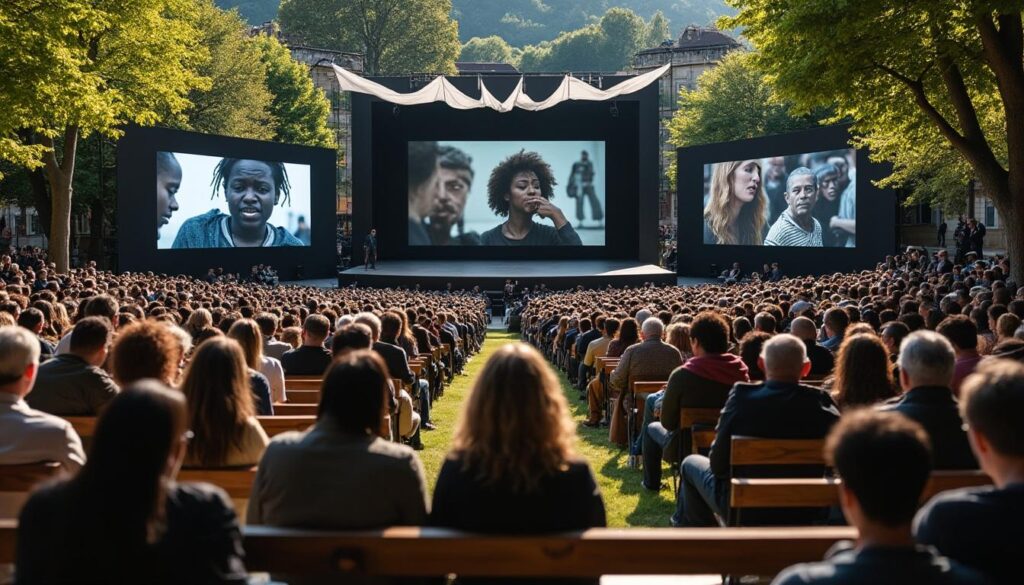
The 78th Locarno Festival delves with intense passion into narratives reflecting wounded bodies, exploring individual suffering and struggles through the power of cinema. This edition promises a deep immersion into stories where memory, emotional tensions, and the quest for resilience converge, thus offering a unique space for reflection on the human condition.
The 78th Locarno Festival, a meeting place for cinema enthusiasts, stood out this year with a rich and diverse program. Cinematic narratives highlighted striking stories, often centered around wounded bodies. From films exploring physical and psychological suffering to those addressing human relationships in a context of vulnerability, this festival provided a platform for bold achievements that question our relationship with pain and resilience. In this article, we will dive into the standout films of this event, examining their relevance and impact.
A sensory experience at the heart of suffering
Starting with the screenings, the official selection saw feature films emerge that distinguished themselves by their ability to provoke genuine reflection. Each film, by projecting faces of pain, examined our own perceptions of existence. The narratives, although varied, shared a common thread: the exploration of bodies as a metaphor for a wounded world.
Films like White Snail address themes such as depression, death, and the quest for meaning. The main character, Masha, seeking reconnection with life, immerses us in a melancholic atmosphere where each shot reveals a facet of human suffering. The images depict a brutal reality that, paradoxically, can offer hope.
The festival is an excellent mirror of the inner struggles that each individual may encounter during their life. The stark contrast between the warm sun of the Piazza Grande and the dark narratives projected on the big screen enhances the experience, making the viewing even more impactful. The choice of films thus provoked an emotional journey, guiding the spectator through an intimate voyage.
The competing narratives that question body and mind
The international competition gave rise to bold works. The film God Will Not Help by Hana Jusić perfectly illustrates this duality. In an atmosphere of resentment and confrontation, two women face off in a world dominated by toxic masculinity. This intense face-off highlights identity struggles and their impact on the body. The arid aesthetic of the film supports this narration, accentuating the pervasive despair.
In contrast, the film Mare’s Nest by Ben Rivers plunges us into a post-apocalyptic dimension. The bodies of children, now the true heroes, reveal a new form of resilience in the absence of adults. This narrative choice underscores the fragility of humanity while offering an unexpected message of hope. The children, despite their chaotic environment, symbolize a possible future, playing and exploring a world that, from a certain perspective, might seem disenchanted.
- White Snail — Exploration of psychological struggles.
- God Will Not Help — Confrontation between women in a macho world.
- Mare’s Nest — Children reigning over a post-apocalyptic world.
Reflection on identity and collective memory
The duty of memory was also a central theme in several screenings. With Hassan in Gaza by Kamal Aljafari, for example, resonates with the need to preserve a historical narrative. Through images of a dynamic Gaza, Aljafari asserts that the memory of the past is crucial to shaping our present. This documentary, rooted in a complex political context, questions our relationship with history and memories, while revealing a vibrant humanity at the heart of the dunes of oblivion.
Stories of suffering go beyond mere representation. They reflect contemporary struggles, serving as a mirror to our anxieties and the perpetual resonances of our humanity. The way these narratives are woven is intertwined with our own experiences, creating an authentic echo. The strength of the films at Locarno lies in this ability to provoke intense emotions, to highlight relational complexities, and to advocate for greater social awareness.
Festival and sociopolitical issues
The narratives at the festival do not merely limit themselves to tales of individual suffering. They also engender reflections on current sociopolitical issues. Phantoms of July by Julian Radlmaier brilliantly illustrates the challenges related to immigration and exclusion. By blending humor and drama, this film immerses the viewer in a reality where rejection and solidarity coexist. The performances of the actresses, defying gender stereotypes, bring depth to the analysis of identity in a changing world.
These films thus open up essential discussions on taboo subjects, altering our perception of the body and suffering in a collective framework. The Locarno Festival, through its programming, allows new voices to be heard, offering perspectives often overlooked by the mainstream.
With a selection that emphasizes essential narratives around wounded bodies, we are called to question our interaction with memory, identity, and suffering. These themes, more relevant than ever, illuminate the voices of the marginalized and reveal the depth of a youth seeking identity and truth in the face of adversity.
Relive the highlights of the 15th edition of the International Film Festival of La Roche-sur-Yon
Explorations of narratives around wounded bodies at the 78th Locarno Festival
The 78th Locarno Festival, through a rich and bold selection, provided a space for reflection on poignant narratives highlighting wounded bodies bearing the marks of suffering and resilience. This convergence point for film enthusiasts revealed how cinematic art can serve as a mirror to troubled and complex realities, exposing the struggles and hopes of individuals in the face of adversity.
The presented films, ranging from tales of depression and quests for identity to testimonies of historical memory, serve as beacons questioning our relationship with the body and memory. Through portraits of women like Teresa and Milena in God Will Not Help or Masha in White Snail, the festival highlighted female struggles marked by violence and solitude, but also the ability to rise from a tumultuous past.
Works like With Hassan in Gaza testify to the importance of collective memory, reminding everyone that a people’s history is not just reduced to dates, but is embodied in the bodies that have lived it. This encounter between the personal and the political is essential for understanding the contemporary issues we are facing.
In conclusion, the 78th Locarno Festival not only celebrated cinema but also opened a dialogue on human suffering, highlighting the vital energy that radiates even from the darkest experiences, thus nurturing the fertile ground of optimism through art. This festival has been a true platform for the exchange of ideas and reflections, where every film contributed to enriching our understanding of the challenges posed by wounded bodies.


