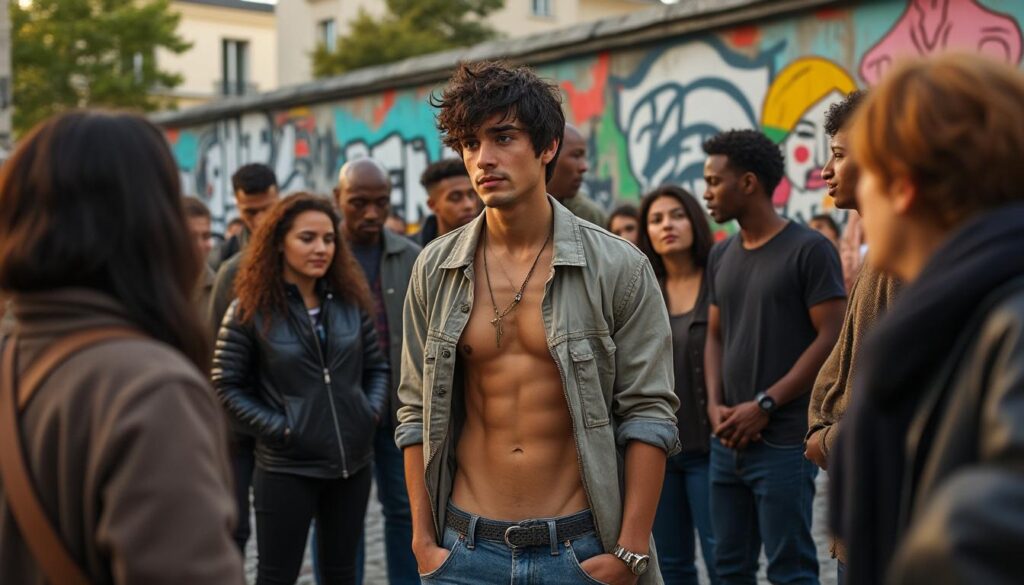
The cinematic visions of Laurent Cantet and Robin Campillo meet in a rich and complex narrative universe through the film ‘Enzo’. This project, which came to life after Cantet’s passing, reflects a fusion of the styles of both directors, combining Cantet’s characteristic social depth with a sentimental exploration orchestrated by Campillo. At the heart of this work, the themes of identity, social class, and desire intertwine, offering a striking view of modern youth and its trials.
The film ‘Enzo’, resulting from the collaboration between Laurent Cantet and Robin Campillo, brilliantly illustrates the cinematic visions of both directors. By taking on an unfinished work of Cantet after his death, Campillo breathes new life into an emotionally rich project. This article explores how these two universes intersect, revealing a story that is both social and intimately human, embodied by the character of Enzo, while addressing themes such as social class, desire, and identity.
An unprecedented and emotional collaboration
The genesis of ‘Enzo’ is a testament to a poignant artistic endeavor. Laurent Cantet, known for his engaged films, wrote the screenplay before his passing. His social vision merges with that of Robin Campillo, who took over to direct the project. Thus, the film is described as “a film by Laurent Cantet directed by Robin Campillo.” Both directors bring distinct imprints, but the harmony between their styles is undeniable.
The contrast between Cantet’s social approach and Campillo’s emotional sensitivity enriches the narrative. The viewer is immersed in a plot that goes beyond the simple presentation of conflicts. On the contrary, it explores human aspirations while resonating with the contemporary realities of youth.
By nature, this hybrid collaboration manages to weave a complex narrative while remaining accessible. Each scene reveals a care for detail, whether in the staging or in the dialogues, allowing the public to connect with the characters.
Enzo’s journey: between social class and identity quest
The heart of ‘Enzo’ rests on the main character, Enzo, played by Eloy Pohu. This young man, coming from a privileged background, makes the bold choice to pursue a masonry CAP. This journey of downward mobility raises profound questions about identity and social expectations. There is a resonance here with Cantet’s earlier works, such as ‘Human Resources’.
- Enzo confronts his father, understanding the class betrayal that develops between them.
- The relationship with his brother, played by Nathan Japy, highlights the rivalry and love that unite them.
- The aspirations of a young man facing his family’s expectations.
The emotional dimension of the story is equally striking. Enzo discovers an attraction for a Ukrainian worker, Vlad, played by Maksym Slivinski. This bond goes beyond mere romance; it represents a passage to a new understanding of oneself and an opening to the world. The film manages to anchor itself in reality without falling into cliché.
A modest approach to desire and reality
The way in which themes of sexuality and desire are approached in ‘Enzo’ is distinguished by its delicacy. Rather than focusing on shame or rejection, the film presents an initiation into the turmoil of emotions. Enzo evolves in an environment where it is difficult to see the truths of the world, and this journey is meticulously captured by Campillo’s camera.
As if to underscore the experience of learning, we witness scenes where Enzo becomes aware of the harshness of life. A symbolic detail: his hands become damaged from the very first sequences. As the story progresses, he learns to appreciate the hidden beauties in this sometimes desperate world. This constellation of sensations weaves a complex tapestry, where the feeling of floating is ever-present.
A look at youth and the quest for self
‘Enzo’ goes beyond a simple representation of homosexuality; it is a true coming-of-age tale. The film’s ending hints at a gentle epiphany, where the upheavals of youth find their place in a devastated world. The duality between fluidity and opacity guides this work toward a form of catharsis, a desire to find one’s place in the face of life’s uncertainties.
This film is also an anthem to resilience and self-construction, echoing universal themes. The upheavals, whether political, social, or emotional, are a pathway to personal knowledge. The beauty of the captured images, combined with the artistic direction, underscores this narrative and emotional richness.
The film ‘Enzo’ bears witness to the unique synergy between two major voices in French cinema: Laurent Cantet and Robin Campillo. By combining social realism with emotional depth, the two directors offer a work rich in meaning, exploring universal themes such as identity, social class, and desire. The narrative, centered on Enzo’s journey as a young man in search of himself, reflects contemporary concerns through both an intimate and expansive approach.
In line with Cantet’s previous works, such as Human Resources, ‘Enzo’ addresses family confrontation from a new angle, upending notions of success and failure. The use of subtle dialogues and nuanced relationships allows for an understanding of the anxieties and frustrations of characters from privileged backgrounds faced with a complex and sometimes hostile world. Enzo’s journey, his abandonment of family expectations to dive into the masonry profession, illustrates this struggle against class stereotypes.
Campillo, by directing this posthumous project, also instills a more personal and emotional dimension. The nuances of Enzo’s attraction to Vlad evoke a delicate and modest exploration of sexuality, far from clichés. The visual splendor and sensitive narration create a backdrop conducive to the discovery of a tumultuous inner world. ‘Enzo’ is not just a film about homosexuality, but a coming-of-age journey towards self-knowledge.
This collaboration between Cantet and Campillo succeeds in transcending simple shooting sets, inviting viewers to contemplate the beauty of the upheavals of youth. The legacy of these two filmmakers shines in every scene, every emotion felt, every poetic image. They remind us that, even in a chaotic world, the quest for self and the search for love remain essential issues, blending tenderness with rebellion.