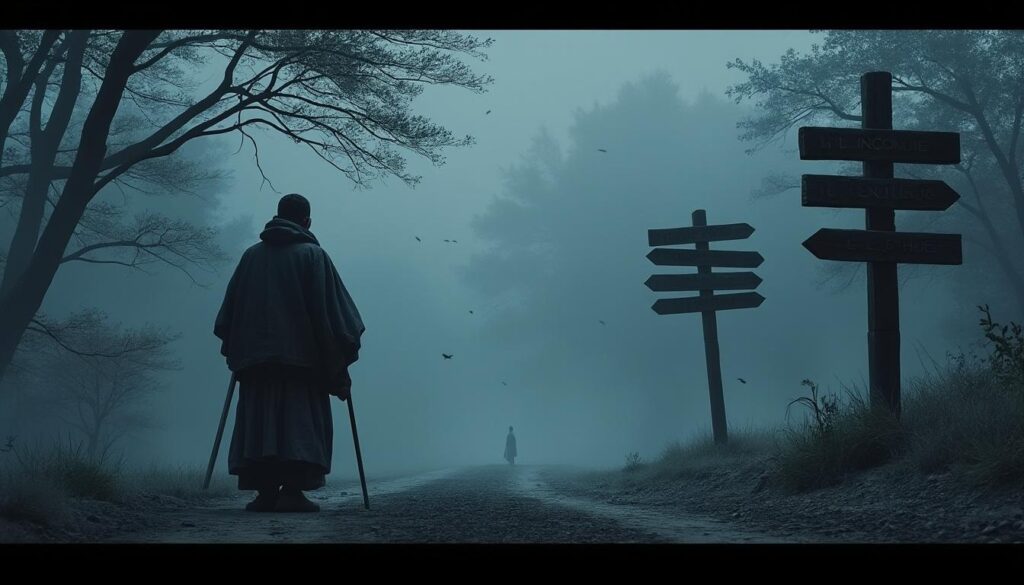
Through the Zatôichi box set offered by Roboto Films, dive into the fascinating universe of this iconic hero of Japanese cinema. With his unique journey, Zatôichi, the blind masseur, embodies a solitary wandering at the crossroads of paths, oscillating between justice and rebellion. This archetypal character, born from kabuki tradition, challenges the norms of a society in full mutation, while illustrating an inner struggle against the torments of the past and the challenges of the present. Discover how this iconic saga weaves together history, melancholy, and personal quests, all while revealing an unimitable cinematic aesthetic.
In this article, we will explore the fascinating world of Zatôichi, a mythical character of Japanese cinema, through the box set offered by Roboto Films. By examining the saga of the blind masseur, we will discover the wandering of this hero, his quest for justice, and the cultural richness he embodies. With its captivating stories and profound themes, Zatôichi represents both the heritage of kabuki and the evolution of the costume film genre, all while confronting complex social issues and the inherent melancholy of his marginalized existence.
The Initiatory Journey of Zatôichi
The saga of Zatôichi begins intriguingly. Depicted as a disabled hero, he initially presents himself as a blind masseur, but his fencing skills and acute sense of justice quickly make him an emblematic figure of Japanese cinema. This initiatory journey, where violence and rehabilitation intertwine, offers a reflection on the human condition and the nature of good and evil. Each film in the series immerses us in a particular universe that reveals the inner struggle of the character against a cruel world.
Indeed, throughout the feature films, Zatôichi embodies a will to transcend his disability. This hero, often wandering, is much more than a mere fighter. His journey renders him both vulnerable and powerful, placing him at the intersection of events that testify to the struggle between traditional values and the modern realities of Edo-period Japanese society. Thus, his adventures evoke themes of duty, loyalty, and social decay.
A Hero Between Shadow and Light
The figure of Zatôichi is essentially ambivalent. On one hand, his disability makes him vulnerable, placing him on the margins of a society where strength is often synonymous with worth. On the other hand, this vulnerability bestows upon him a perceptible wisdom. Thus, his character evolves, questioning the standards of the traditional warrior. Wandering from village to village, he encounters characters just as complex, some seeking redemption, others sinking into vice.
The staging throughout this saga is carefully considered. The visual techniques, particularly the use of black and white, add a poetic and melancholic dimension to the narratives. The fights are choreographed with precision inherited from kabuki, highlighting the tension between the intensity of action and the depth of emotions. This contrast even more accentuates the humanity of the character, placing him face to face with his own demons.
The Themes of Redemption and Solitude
At the heart of each Zatôichi film, the solitude of the hero resonates deeply. This nomad, rejected by society due to his disability, often has ephemeral connections. His interactions, whether friendly or antagonistic, underscore the importance of human values in a disintegrating world. Zatôichi then becomes a symbol, that of a resistance against a dark reality where love and loyalty are put to the test.
Impossible loves, like that of Otane, present in several episodes, complicate the narrative by introducing hope and sadness. Moreover, Zatôichi represents a bridge between the past and the present, embodying both a rich cultural heritage and the new aspirations of a changing society. These motifs of redemption, sacrifice, and unrequited love weave a narrative thread that captivates the viewer.
A Rediscovery of Cinematic Heritage
The Zatôichi box set from Roboto Films is not just about reliving the adventures of an iconic hero; it is also an opportunity to rediscover a cinematic heritage. By gathering several films with interconnected themes, it allows for an exploration of the nuances of the work and fosters a dialogue around the evolution of the genre in Japanese cinema. Each film in this collection represents an essential piece of a narrative whole that defies time.
The meteoric success of Zatôichi has given rise to numerous similar works and has influenced martial cinema across the globe. Thus, the saga has crossed borders. In return, it has also solidified its status as a cultural figure within Japanese traditions. Through its epic tales, Zatôichi has managed to embody the spirit of a changing Japan while reaffirming the traditional values it held dear.
The Zatôichi box set offered by Roboto Films proves to be a true dive into the complex and fascinating world of Japanese cinema, while highlighting the iconic figure of the blind masseur. Through these films, we discover a hero who embodies both solitude and wandering, while challenging the social and moral conventions of his time. Zatôichi is this complex figure who, through his disability, transforms into a symbol of resistance against a society that is often cruel and merciless.
The narratives skillfully intertwine, offering the viewer a rich panorama of the themes cherished by kabuki and martial aesthetics. Zatôichi, while being a marginalized character, rises to the status of a mythical hero, reminding us of the archetypes that populate Japanese culture. His strength lies in his ability to navigate between the world of the living and that of the dead, between honor and disdain, thus revealing human contradictions. The directing of Kenji Misumi and Tokuzô Tanaka contributes to weaving this link between the past and the present, paying homage to a bygone era while captivating contemporary audiences.
This box set does not merely present films; it pays tribute to a cultural heritage. Through in-depth analysis and enriching supplements, each viewing becomes both an aesthetic and intellectual experience. It challenges the viewer to reflect on the human condition, identity, and wandering, while celebrating the tragic beauty of Zatôichi’s journey. In summary, this box set is an invitation to reassess our perception of heroes, social norms, and the search for meaning in a constantly evolving world.