
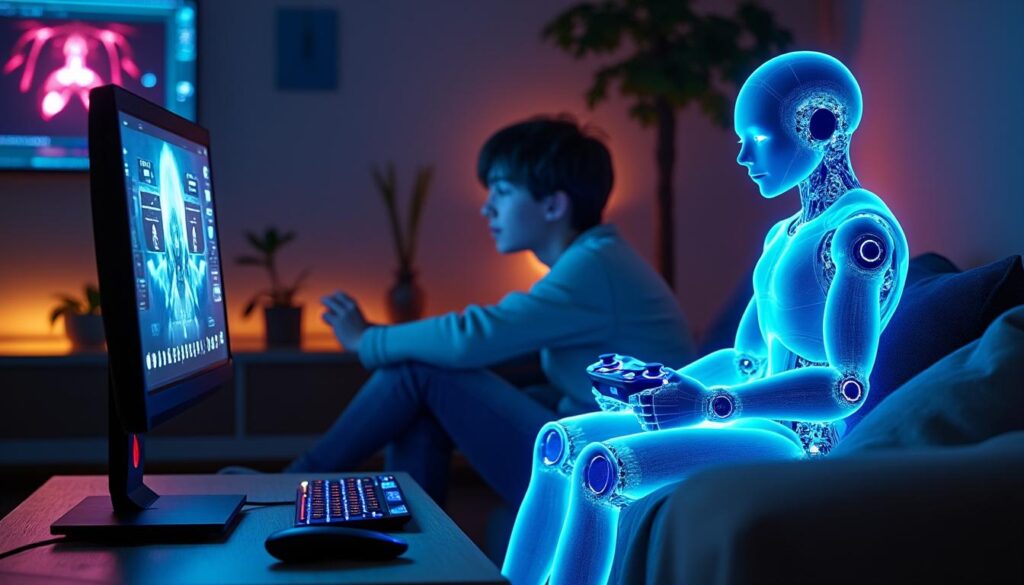
Imagine a world where your gaming experience is optimized by an AI ghost capable of playing on your behalf, allowing you to overcome the toughest obstacles effortlessly. This idea, once considered merely a technological chimera, is increasingly emerging in our daily lives. With recent advances in artificial intelligence and the enthusiasm for video games, the boundaries between human and machine are blurring, placing players in front of a fascinating dilemma. The playful future we envision could redefine how we play, compete, and even interact with these virtual worlds that excite us so much.
With constant technological advancements, the idea of “AI ghosts” playing on our behalf is becoming an increasingly tangible reality. Imagine a world where algorithms take over game mechanics, allowing you to focus solely on the enjoyment of the experience. This phenomenon raises questions about personal engagement in gaming as well as the future of human interaction with video games.
A digital assistance in full evolution
It is not surprising that the gaming industry has always sought to facilitate the experience for players. The idea of interactive assistance is far from new. Historically, services like help hotline and strategy manuals have been made available to players. These tools were aimed at overcoming difficult obstacles designed by developers. But today, this assistance is evolving into something more complex.
Recently, a patent application published by Sony raised significant interest. The technology would allow AIs to interact with video games to help users overcome inherent challenges. Depending on their level of experience, these “AI ghosts” could suggest tactical solutions or take full control during certain segments of the game.
A matter of user experience manipulation
The implications of this innovation are fascinating. On one hand, it could prolong players’ interest in titles that would otherwise have frustrated them. However, on the other hand, it poses moral and ergonomic challenges. What happens when AI becomes a crutch for failure?
Game designers have already dedicated countless hours to making experiences immersive. Allowing an AI to perform certain tasks could push the true narrative potential. Are players there to simply watch the story unfold, or do they want to engage actively? The answer may seem obvious, but it remains subject to each player’s analysis.
The risk of gaming disengagement
Like any innovation, the move towards games assisted by advanced intelligences presents risks. Imagine a player who relies solely on their AI to achieve goals. This phenomenon could create a culture where the captures of rewards themselves are obscured by digital ease. Challenges then become superficial.
This leads us to question what makes an authentic gaming experience. Is it the mastery of skills or the immersion in a captivating narrative? The speed and efficiency of AIs could result in a lack of dedication to personal progression. In a culture where performance is already valued, players might tend to lean on their digital assistant.
The implications for the future of games
As this trend develops, many questions arise about the authenticity of achievements. Accomplishments once seen as personal could be attributed to algorithms, blurring the lines of effort and success. In a world where “AI ghosts” do most of the work, what remains of the human experience?
On the other hand, there is a positive aspect. These new technologies could make gaming more inclusive, allowing a wider range of people to enjoy playfulness. AI solutions could alleviate difficulties for casual players wishing to explore new game universes without feeling overwhelmed. In a way, artificial intelligences can then enhance the community of enthusiasts by eliminating frictions.
- Always leverage human experience
- Help players overcome difficulties
- Have an ethical approach towards the use of AIs
A future where man and machine coexist
The video game of tomorrow cannot legitimately abandon the human experience in favor of an entirely digital one. Designers will need to skillfully navigate between innovation and the preservation of authentic interaction. It will be primarily about finding a balance that values both human creativity and technological relevance.
Ultimately, the question remains. With the rise of AIs, who will be the true master of the game – man or machine? Certainly, the coexistence of the two could bring new fascinating perspectives. Games could become platforms for collaboration, offering a rewarding experience at all levels.
In summary, we have the opportunity to shape a playful future where human skills and AI assistance mutually enhance each other, making the gaming world more engaging and inclusive.
Technological advancements, such as the emergence of AIs “ghosts,” open a new era for the world of video games. While these digital assistants promise to facilitate the gaming experience, they also raise profound questions about our relationship with playfulness and skill. By allowing AIs to play on our behalf, we risk diluting the intrinsic pleasure and creativity that games offer. The idea that a machine could take over our efforts might overshadow the moments of frustration and goodness that are actually integral parts of the playful journey.
It is difficult to predict whether these technological tools will serve to enhance the gaming experience or create a divide between us and video games. On one hand, these AIs could offer valuable assistance to struggling players, reducing frustration and making games more accessible to a wider audience. On the other hand, they could reduce the engagement and personal investment required to master the challenges that developers have intentionally integrated into their creations.
This debate on dependency on AIs highlights a tension between the pursuit of a rich gaming experience and the temptation to lean on easy solutions. Game studios will need to navigate these issues and find a balance to preserve the authenticity of the gaming experience while leveraging the potential of new technologies. The challenge will be how to integrate these innovations while keeping intact the very heart of gaming: human interaction, creativity, and exploration.


