
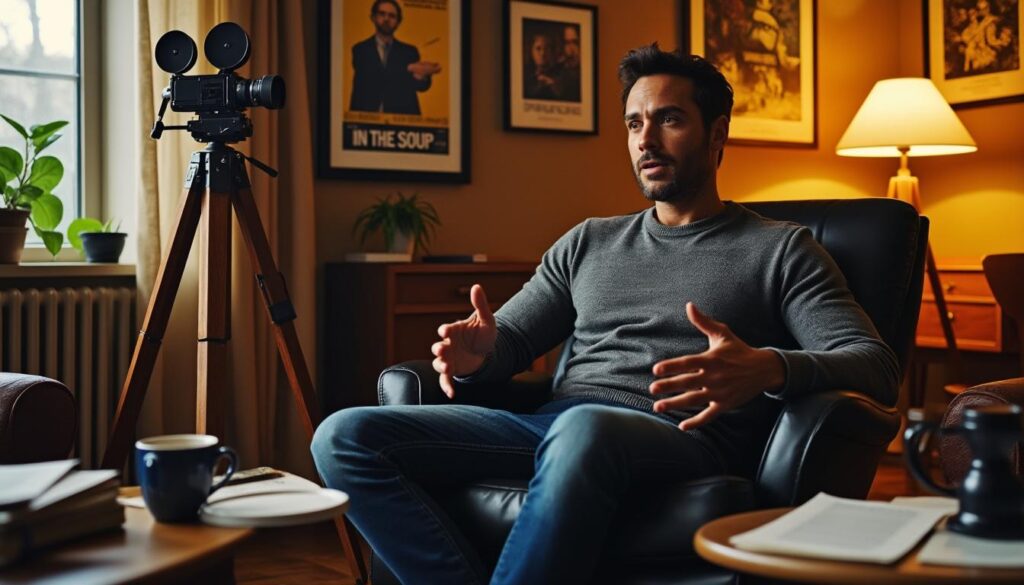
In a cinematic context where voices emerge and vie for attention, the revival of Alexandre Rockwell’s film In the Soup attracts cinema enthusiasts. As this feature film, originally released in 1992, returns to the spotlight thanks to a restored copy, a meeting with its director offers us the opportunity to dive into the heart of his universe. Through this exclusive exchange, let’s discover the inspirations, the challenges, and the soul of a work that, although forgotten, continues to resonate with a palpable force and timeless energy.
Unprecedented and captivating, this article transports you to the heart of Alexandre Rockwell’s vision through his emblematic work In the Soup. Between personal memories and reflections on the film industry, the director shares his inspirations and his journey while evoking the universal themes of a dream come true. Discover here the fascinating aspects of this restored film that makes its long-awaited return.
Return to a classic of independent cinema
Upon its initial release in 1992, In the Soup made a mark, even though it remained relatively unknown to the general French public. Today, this feature film represents a poignant testament to the time when one could still survive in New York as an artist with minimal resources. Drawing from this legacy, the film has recently been restored, shedding new light on a work that was already highly appreciated by connoisseurs.
Alexandre Rockwell reflects on his early influences and the sensations of a dream as a creator. Looking at In the Soup after fifteen years, he finds that the very essence of the film remains intact. It is a work that speaks of the spiritual nourishment of artists and their quest for freedom.
The creative process behind “In the Soup”
Rockwell shares how his personal experiences nourished the film’s screenplay. The line between reality and fiction is sometimes blurred. His early films, influenced by iconic figures like Fellini and Godard, shaped his artistic vision. This blend of inspiration and real emotions gives the narrative an unparalleled depth.
The director reminisces about a time of naïveté, enthusiasm, and carefreeness. During this period, he devoted himself wholeheartedly to his passion, even in the face of economic difficulties. He cared little about the commercialization of his work, only about the necessity of expressing his creativity.
The actors who shaped the world of “In the Soup”
In In the Soup, actors like Steve Buscemi and Sam Rockwell made their debuts. Rockwell recalls his formative years spent in New York, frequenting East Village clubs. It was a time when the artistic scene was vibrant, and everyone was trying to express their art. It felt like a music group coming together to create, where the importance of camaraderie outweighed the idea of a career.
The casting was a true moment of creativity, as the actors brought their own personalities and energy to the project. Each audition was an opportunity to see emerging talents, and Rockwell knew right away that they would be perfect for the roles, particularly the embodiment of a gangster by Seymour Cassel.
A unique cinematic aesthetic
The decision to shoot In the Soup in black and white, influenced by great masters of cinema, creates a distinct atmosphere. Rockwell admits to being more inspired by directors like Dreyer than by Godard on this point. For him, the purity of black and white images adds depth to the film’s narrative.
This aesthetic is not merely a matter of style. It reflects the essence of the dream and the artistic quest of the characters. Every shot is carefully considered, and every visual detail contributes to telling a story that resonates with as much fervor as at the time of its creation.
Between dreams and realities of cinema
The director does not hesitate to speak of the constant struggle to preserve art in a sometimes cold and commercial sector. The importance of authenticity inhabits him, and he expresses this during interviews. Rockwell argues that making a film should not be reduced to financial concerns but to a sincere artistic approach.
With a history as an independent creator, he worries about current trends in cinema. According to him, the goal should be sharing experiences and human connections, rather than simply checking off commercial boxes. Rockwell is amazed by the films’ ability to capture moments, and their power to touch the audience.
The resurrection of the film in 2026
The recent restoration of In the Soup in 2026 is a turning point. It allows the film to find an audience that had forgotten it but aspires to works with a strong emotional charge. The numerous obstacles faced in the past have not prevented this gem from emerging from the shadows, illustrating its resilience.
Rockwell expresses his gratitude to those who worked on the restoration. Their efforts have helped preserve his dream and confirm the importance of art. This return to the big screen allows for the rediscovery of the poetic universe imagined by the director and is a testament to a time when people still believed in the power of storytelling.
In this captivating interview with Alexandre Rockwell, we had the opportunity to discover his cinematic universe through the lens of his film In the Soup, recently restored and screened again in theaters. This film, which marries reality and fiction, is a testament to the artistic spirit and authenticity of the experiences lived by the director. His nostalgic view of a time when New York was a vibrant backdrop for young artists offers a powerful echo that still resonates today.
Rockwell shares a sincere vision of independent cinema, highlighting how the aspirations of his characters resonate with an audience in search of connection. He tenderly evokes the influences that have shaped his career, from the great masters of the past like Godard and Truffaut to the precious friendships he has cultivated with other filmmakers. This approach underscores the idea that cinema is not only a means of expression but also a human link, a celebration of shared creativity.
As In the Soup is reborn under the spotlight, the exploration of themes of adolescence, dreams, and artistic desires remains undeniably relevant. While the industry has evolved, the message Rockwell conveys about the power of dreaming endures. By immersing us in his world, he reminds us that every film is an open door to each person’s stories, thus paying tribute to the beauty of cinematic expression in its purest form.


