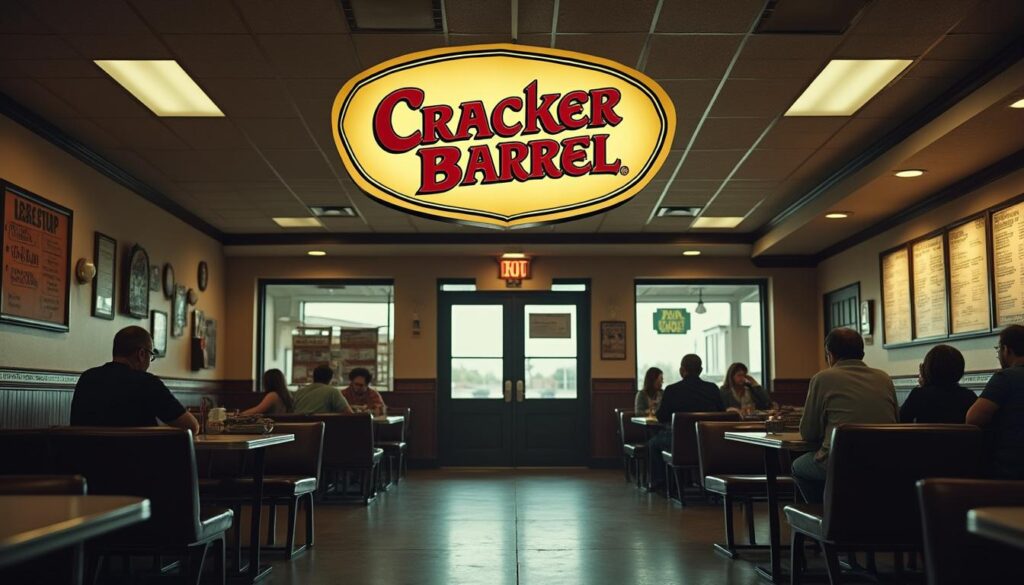
The new logo of Cracker Barrel, unveiled for the first time after nearly 50 years, is causing deep unrest among the brand’s fans. This significant change, far from honoring the heritage of the brand, results in a bland and generic symbol that echoes a troubling trend: that of companies erasing their unique features in favor of bland conformity. The resulting disenchantment is palpable, transforming the enthusiasm once associated with this institution into a frustration that spreads through numerous online comments.
The recent announcement of the logo change of Cracker Barrel has sparked a heated debate among consumers and food enthusiasts. After nearly 50 years of its old emblem, the restaurant chain has decided to bet on a more modern image. However, this decision inspires neither enthusiasm nor approval. On the contrary, it resonates with a deep disenchantment, revealing the complexity of brand identity in the face of the desire for renewal. This article will explore the various reactions to this evolution, as well as the broader implications regarding authenticity and values.
a controversial change
The new logo of Cracker Barrel, which replaces that of a man sitting next to a barrel, is seen as a symbol of the current trend among many companies to sacrifice their specificity for more abstract representations.
This change has been described as both dreary and soulless. Unlike the old logo, which evoked warmth and tradition, the new version, with its simple yellow format, leaves customers perplexed. Indeed, many claim that its appearance could easily be created in a few minutes with graphic design software.
consumer reactions
With the arrival of this logo, many customers have not hesitated to express their dissatisfaction on social media. A growing sense of alienation seems to be developing. Reports even state that some customers have engaged in a form of resistance, derogatorily labeling the new image.
- Frustration over a lack of originality.
- Questions regarding the brand’s values.
- Calls to revert to the old iconic logo.
In a world where consumers seek authentic experiences, this change is perceived as a betrayal. Customers wish to identify with a heritage that, for them, represents a connection to their childhood memories.
the impact on brand culture
Beyond consumer feedback, the evolution of Cracker Barrel’s visual identity raises questions about brand culture. In a competitive environment, companies are fighting to attract a young audience. However, it is essential to understand that this need for modernity should not come at the expense of heritage.
Cracker Barrel’s approach can be seen as an attempt to meet the expectations of a generation that prioritizes immediacy and clarity. But in this quest for approval, what could be lost is the rich tradition that has made the chain’s success. Nostalgia is a powerful driver of consumption, and by neglecting its importance, Cracker Barrel risks losing a significant portion of its clientele.
reflections on disenchantment
This change is not isolated. It is part of a larger pattern, where many companies seek to modernize their image to remain relevant. However, this process can lead to a feeling of disenchantment, both among customers and employees. Indeed, the true identity of a company is shaped by its history and traditions.
Instead of engaging in a superficial transformation, it would be better for Cracker Barrel to seek a balance between modernity and tradition. This shift to a streamlined logo may seem to meet contemporary demand, but it is crucial not to sacrifice the essence of what makes the place special.
In conclusion, this event opens a crucial debate about brand identity and their ability to evolve without losing their soul. Consumers, more than ever, want to feel an authentic connection. To explore this topic further, you can check out my article on Mike Leigh’s masterpiece or the legal notices and GDPR that frame our digital world. Companies must navigate carefully through this ever-changing landscape, lest they become mere shadows of what they once were.
Finally, consider the impact this could have on artistic creations, as exemplified by the story of an artist that you can discover through this link: a fascinating article on plagiarism in the industry.
The New Logo of Cracker Barrel: A General Disenchantment
The launch of the new logo of Cracker Barrel causes genuine discontent among consumers. After nearly 50 years of existence, the iconic brand has decided to abandon its traditional logo featuring a man sitting next to a barrel in favor of a minimalist, bland, and uninspiring design. Many believe that this transformation symbolizes the company’s desire to conform to contemporary standards, but at the cost of its heritage and authenticity.
Customer opinions vary, but a feeling of disconnection and disappointment predominates. For a brand that presents itself as a pillar of Southern U.S. culture, this new symbol seems to flirt with a sort of banality. Addressed by a demand for modernity, the brand has chosen to sacrifice a part of its identity in hopes of attracting a younger clientele, but in doing so, it has alienated its loyal fans of the old style.
Many fans are crying scandal on social media, reflecting a deeply-rooted nostalgia for the aesthetic of the past. Restaurants that took pleasure in recreating the warm and rustic atmosphere now find themselves at a crossroads. The transition to white walls and minimalist decor is causing discomfort. Many customers are now asking: where has the soul of Cracker Barrel gone? Is it still possible to find that comfort, that conviviality, that made us love those family meals so much?
The logo change is not merely a design question; it is a reflection of the struggle to preserve values while trying to adapt to an increasingly demanding business reality. As the brand seeks to renew itself, customers do not forget what once attracted them, and this disenchantment could very well prove counterproductive in the long term.