
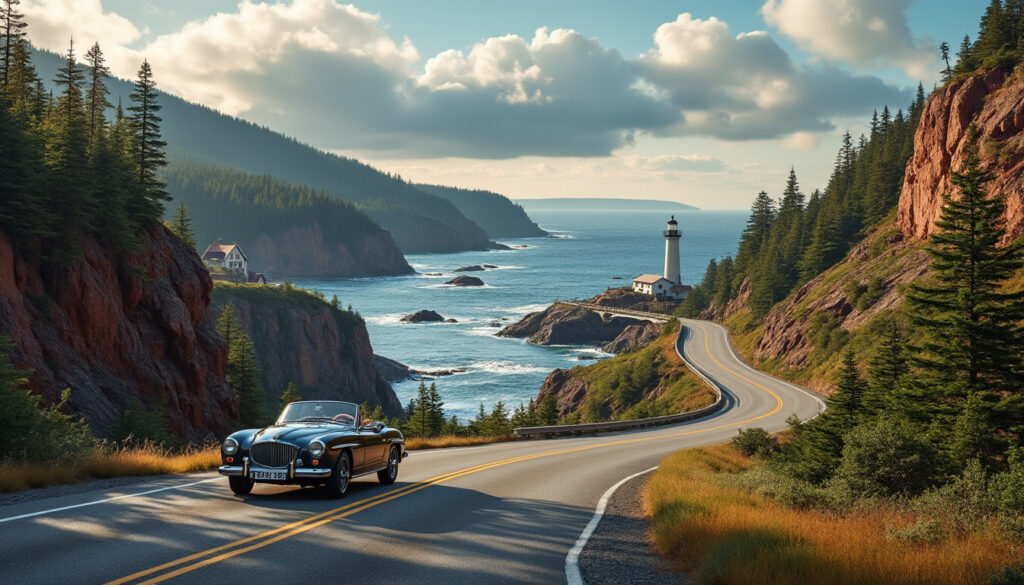
Set off to discover New Brunswick, in eastern Canada, through a journey along the road between vast forests, Acadian villages, and wild coasts. From the Bay of Fundy to the shores of Chaleur Bay, savor the great outdoors, warm encounters, and local specialties, including lobster.
Discover New Brunswick on a Road Trip in Eastern Canada
Between vast forests, Acadian villages, coastal shores, and wildlife encounters, New Brunswick is best explored at the pace of a road trip. This province in eastern Canada invites you to travel peaceful roads, taste local specialties, and linger in landscapes shaped by the tides. Here is an itinerary to explore its remarkable stops, along with practical tips to organize your stay.
Discover New Brunswick on a Road Trip in Eastern Canada
Located between Quebec, Nova Scotia, and the U.S. state of Maine, New Brunswick is one of Canada’s maritime provinces. Its capital, Fredericton, is inland, while Saint John is among its main cities. The territory is bordered by several marine spaces, including Chaleur Bay, the Gulf of Saint Lawrence, and the Bay of Fundy.
The landscapes alternate between forests, rivers, lakes, sandy beaches, and cliffs. Along the coastal roads, houses can be rare, and the woods seem to stretch to the horizon. This sense of space gives the journey a tranquil atmosphere, particularly appreciated when one wants to get away from large cities.
A Province Shaped by Two Languages and an Acadian History
The region has a cultural identity marked by its Acadian past and British influences. French remains prominent in the northeast, particularly around Caraquet, while the southwest is predominantly English-speaking. This diversity is reflected in everyday exchanges, place names, and local traditions.
In Caraquet and its surroundings, Acadian history unfolds through villages, music, and gastronomy. To further your exploration of francophone communities, also consult this overview of countries where the French language is spoken around the world. New Brunswick thus offers a unique stop in the vast francophone international landscape.
Preparing Your Itinerary and Taking to the Road
A week-long itinerary allows you to connect several important sites while limiting long driving days. It is possible to start in Bathurst, go to Caraquet, and then continue to Miramichi, Shediac, Alma, and Saint Andrews. Depending on the chosen stops, daily drives are often reasonable, leaving time for visits and relaxation.
For a more relaxed pace, plan for about ten days. This duration allows for unplanned breaks, dedicating a day to trails, or staying longer by the coast. Distances may seem modest on a map, but scenic stops and detours to the beaches naturally extend the days.
Renting a car facilitates travel, as attractions are spread throughout the province. From Montreal, a domestic flight can allow you to reach Bathurst and then start the journey in the northeast. To imagine other motorized escapades in the country, you can also browse this road trip itinerary in Canada.
From Bathurst to Caraquet, at the Heart of Acadia
When leaving Bathurst toward the east, stop at Grande-Anse. Its lighthouse with Acadian colors stands near Chaleur Bay and offers a beautiful viewpoint of the coastline. This is a first opportunity to take in the coastal landscapes before continuing to Caraquet.
Near this town, the Acadian Historical Village showcases several centuries of life and traditions. More than forty reconstructed buildings recreate work and living spaces, from houses to shops, with interpreters in period costumes. The visit is on foot and provides a better understanding of the professions, habits, and heritage of the region.
Caraquet also charms with its colorful houses and relaxed francophone atmosphere. Restaurants and bars feature seafood products, while music nights allow for discovering local artists. A stop at the Fils du Roy distillery can complete the visit with a discovery of artisan methods and regional spirits.
Before resuming the journey south, the New Brunswick Aquarium and Marine Centre, near Shippagan, offers a visit dedicated to marine life. Lobsters take center stage alongside other species from the Gulf of Saint Lawrence. This stop is particularly suitable for families and provides a concrete introduction to the coastal ecosystem.
From Miramichi to Shediac, Between River and Coast
The road south of Caraquet leads to Miramichi, a region associated with fishing, rivers, and vast spaces. The Miramichi Bay and its waterways invite birdwatching and seal spotting, depending on local conditions and excursions offered. Water activities also allow for discovering the landscapes from the water.
Kouchibouguac National Park is a remarkable nature stop. Its forests, salt marshes, lagoons, beaches, and dunes make up very varied environments, accessible by hiking trails or bike paths. A boat trip on the river can also lead to areas frequented by seals.
The Bouctouche dune, several kilometers long, is notably discovered from a boardwalk built above fragile environments. Lookouts overlook the sand, marshes, and waters of the Northumberland Strait. Take the time to stop: lighting conditions change quickly throughout the day.
Wildlife Encounters to Appreciate with Respect
New Brunswick is home to many wild animals, including black bears, seals, and whales. Observing them in their habitat can become a highlight of the visit, provided you prioritize guided outings and practices respectful of wildlife. It is important to follow the guides’ instructions and maintain an appropriate distance from the animals.
The Miramichi area is known for its aquatic excursions, while the Bay of Fundy is a sought-after destination for whale watching. Sightings are never guaranteed: weather, season, and the animals’ movements influence the chances of encounters. Some small businesses previously associated with bear watching have ceased their activities; therefore, check recent information before booking.
In Shediac, marine specialties are omnipresent, and lobster features prominently on many menus. The town is also known for its giant crustacean sculpture, an unusual emblem that attracts passing visitors. A stop at a port-side restaurant allows you to taste local catches in a maritime atmosphere.
From Shediac to Alma, the Spectacular Tides of the Bay of Fundy
Continuing toward Alma, the landscape transforms through the capes, beaches, and coves. Cape Enragé combines high cliffs, a lighthouse, and a viewpoint over Chignecto Bay. When conditions allow, its site also offers outdoor activities and a space to stop and admire the coast.
Hopewell Rocks is one of the most famous sites in the Bay of Fundy. The tides reveal high rock formations that can be approached on foot when the water level is low. At high tide, the panorama changes completely: check schedules in advance and allow sufficient time to observe the two faces of the place.
Fundy National Park brings together miles of trails, forests, waterways, and waterfalls. The walk to Dickson Falls is an accessible hike that traverses a wooded and humid environment. Visitors with several days can choose other routes according to their level, the weather, and the desired duration.
The village of Alma serves as a good base for exploring the surroundings and enjoying a break after a day of walking. There are accommodations, cafes, and restaurants focusing on seafood. In the area, some establishments occupy uniquely characterized places, such as an old church converted into a brewery.
Saint Andrews and Sea Outings
Saint Andrews, often called St. Andrews-by-the-Sea, is a small town appreciated for its clean streets, historical buildings, and seafront. Its wharf serves as a starting point for excursions in the Bay of Fundy. Boat trips allow you to discover the islands and marine landscapes, in addition to searching for whales.
Whales may briefly appear in the distance, but navigation remains interesting even without close sightings. From the bridge, you can see unspoiled coasts and a vast expanse of water that changes color over time. Bring warm clothing, as the sea breeze can be chilly, even on summer days.
Visitors can also spend time at Kingsbrae Gardens, where themed spaces showcase a great diversity of perennials and landscaping designs. Families find activities and facilities aimed at children. The town lends itself to a peaceful stroll between shops, historic streets, and the waterfront.
When to Go and How to Organize Your Days
The period from May to September is generally suitable for coastal activities, hiking, and boat excursions. Early summer allows travel before the height of the high season, with often mild temperatures. Conditions remain variable, however: plan several layers of clothing and check the forecasts before going out to sea.
From September to October, autumn colors transform the forests and inland roads. Temperatures become cooler, but this season can offer beautiful landscapes and a quieter atmosphere. Visitors can also find more favorable accommodation rates, depending on locations and dates.
Winter brings snowy landscapes and seasonal activity opportunities, but one must consider road conditions and the reduced hours of some sites. Several coastal attractions operate primarily during the warmer months. Before leaving, check their opening calendar and adjust your itinerary according to the weather.
To appreciate the Bay of Fundy, plan visits according to the tides rather than relying solely on your arrival time. This preparation is particularly important at Hopewell Rocks, where access to the seabed depends on water level. Also, keep open time slots: they can accommodate an unexpected walk, a long meal, or a stop in a village.
Finally, reserve accommodations in advance for the most popular stops during the summer and confirm excursions before moving. A car offers great freedom, but some stretches are remote and services can be sparse. Bring water, snacks, and an offline map to travel smoothly between the main towns and natural sites.
A Road Trip at the Heart of New Brunswick
Traveling through New Brunswick by car means discovering a province where nature accompanies each step. Quiet roads traverse vast forests, follow rivers, and unveil coastal villages bathed by the sea air. Between Chaleur Bay and the Bay of Fundy, the landscapes change along the route, without the daily distances being too long. A week allows you to see the iconic places, while a ten-day stay provides more room for breaks and detours.
In the northeast, Caraquet invites you to better understand Acadian culture. The Acadian Historical Village brings to life scenes from the past with its houses, workshops, and interpreters in costume. Further south, the beaches and dunes of Kouchibouguac National Park offer a setting conducive to walking, biking, and observing seals. In Shediac, lobster holds a prominent place on menus and in local identity.
The Fundy region reveals another aspect of the journey. At Hopewell Rocks, the tidal range transforms the landscape and allows you to discover the rock formations at low tide. The trails in Fundy National Park wind between waterfalls and undergrowth, while the coastline offers spectacular panoramas. From Saint Andrews, a seaside outing may allow glimpses of whales in the bay.
Encounters are also part of the experience: the hospitality of the locals, the francophone and anglophone traditions, the colorful lighthouses, and regional specialties give each stop its character. To fully enjoy this diversity, renting a car facilitates travel and allows for exploring the province at your own pace. From May to September, mild temperatures favor outdoor activities, while autumn colors the forests in vibrant hues.


