In eastern Bali, the Tirta Gangga water palace reveals a peaceful setting of pools, fountains and tropical gardens. With stone stepping-stones laid across the water, colorful fish and Balinese statues, this former royal residence is a lovely place to discover the heritage and landscapes of the Karangasem region.
In eastern Bali, Tirta Gangga water palace unfolds its pools, fountains and gardens in a peaceful setting, in the heart of the Karangasem region. A former royal residence, this place brings together heritage, Balinese architecture and sacred water sources. Here’s how to plan your visit, discover its main areas and make the most of this stop during a stay in the east of the island.
A water palace amid the landscapes of eastern Bali
Surrounded by rice fields and tropical vegetation, Tirta Gangga offers an atmosphere quite different from that of Bali’s lively southern districts. Water is everywhere, from the pools to the sculpted fountains dotted throughout the gardens. The site invites you to take your time, observe the details and stroll along the paths without rushing.
The name Tirta Gangga refers to the water of the Ganges, a sacred river in the Hindu tradition. The natural springs that feed the estate also have spiritual significance for the Balinese. This sacred dimension coexists with the palace’s tourist use, as it is now open to visitors.
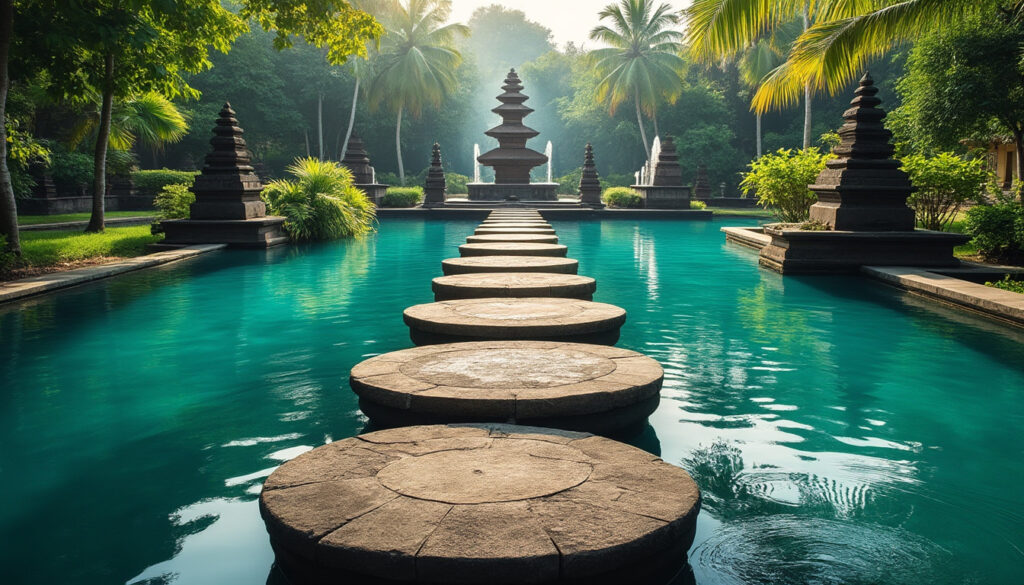
The site is ideal for a leisurely stroll. Stone stepping-stones laid across the water allow you to cross some of the pools, while fish and aquatic plants bring the landscape to life. The grounds are carefully laid out, with vistas connecting the fountains, statues and gardens.
A former royal residence shaped by history
The palace was built in 1947 by Anak Agung Anglurah Ketut, the last raja of the Kingdom of Karangasem. Originally, the estate served as a residence and retreat for the royal family. Its pools and landscaped grounds were arranged around natural springs considered precious.
At the time, water palaces held a special place in the Balinese kingdoms. They combined the roles of retreat, royal representation and celebration of water. Tirta Gangga still bears witness to this relationship between royal power, landscape design and Hindu beliefs.
The site was badly damaged during the 1963 eruption of Mount Agung. Its reconstruction helped preserve its architectural identity and its role in the region. Today, a visit offers a glimpse of this heritage while allowing you to discover a living estate that is integrated into local culture.
The main areas to discover
The Nawa Sanga Fountain
At the heart of the palace stands the Nawa Sanga Fountain, a monumental structure made up of several tiers. It catches the eye as soon as you arrive in the central areas. Visitors can approach it by stepping across the stones set in the pool, a route that lets you appreciate the building’s proportions and the play of water.
The pools, canals and fish
The large central pool is one of the highlights of the visit. Walkways and stone stepping-stones let you move above the water, with colorful fish visible beneath your feet. Water lilies and lotuses add touches of greenery to the setting.
Around this body of water, smaller pools and canals form a network that structures the estate. A small island, sometimes nicknamed Demon Island, lies in the main pool. Two bridges lead to it and offer new views of the fountains.
Statues and tropical gardens
Balinese statues are scattered throughout the gardens and near the pools. Some depict mythological figures or deities, while others evoke symbols associated with water and Hinduism. They give the palace a cultural dimension that complements the discovery of its architecture.
The vegetation connects the different water features. Flowers, shrubs and tropical trees provide shade and enhance the sense of freshness. If you take the time to observe your surroundings, you’ll notice that the gardens are more than just a backdrop: they shape the views and accompany your stroll.
The estate covers more than a hectare, but is still easy to explore on foot. Landscaped paths connect the pools, fountains and resting areas. You can explore freely at your own pace, spending as much time as you like on the details that interest you.
Where is Tirta Gangga and how do you get there?
The water palace is located in the Karangasem region of eastern Bali, about six kilometers from Amlapura. It is set in a rural landscape among rice fields and green hills. Its location makes it easy to include in an itinerary focused on the eastern part of the island.
From Candidasa, allow about thirty minutes by road, depending on traffic and your exact starting point. Amed is also close enough for a day trip. The site can also be included on a route between Amlapura, Sidemen and the coastal villages in the east.
A car or private driver is the most convenient way to reach the estate. The journey from Ubud or southern Bali generally takes between an hour and a half and two hours, although traffic can make it longer. Allow extra time if you want to arrive early or continue on to another stop.
The roads pass through inhabited areas and agricultural landscapes, making the journey interesting in its own right. A driver can make it easier to stop along the way and adapt the route to your other visits. If you’re traveling by scooter, check the traffic conditions and consider your level of experience before setting out on a long ride.
How much time to allow and when to visit the palace?
Allow around an hour and a half to two hours to explore the estate without rushing. This gives you time to walk through the gardens, enjoy the main pools and take in the sculptures. If you’d like to swim or take lots of photos, you may want to allow more time.
The palace is generally open every day, from 7 am to 6 pm. However, opening hours may change, so it’s best to check them before setting out with your accommodation or a local contact. Arriving early in the morning helps you enjoy a quieter atmosphere and pleasant light for photos.
The middle of the day is often busier, especially when groups of travelers are visiting. A late-afternoon visit can also offer a peaceful atmosphere, as long as you arrive early enough to explore the grounds before closing time. In either case, leave some flexibility in your schedule.
Admission, swimming and practical tips
Admission costs around IDR 50,000 per person, but the price may change. Check the price on site or before your visit, especially if you’re keeping a close eye on your budget. Also bring some cash for any small expenses.
Swimming is allowed in some of the palace’s pools, but not all of them. If you’d like to take a dip, bring a swimsuit and towel. Ask which areas are open for swimming when you arrive, and follow the posted rules, particularly near areas associated with the sacred springs.
Shoes that are easy to take off can be useful as you move between the different areas. Also bring sun protection and water, especially if you’re visiting during the hottest part of the day. To preserve the site and respect its cultural significance, avoid touching the statues and leaving litter in the gardens.
If you want to photograph the pools from the stepping-stones, proceed carefully and leave room for other visitors to pass. The stones can be wet or slippery. A mindful visit lets you enjoy the setting while respecting the site and the people who come here to pray.
Including Tirta Gangga in an eastern Bali itinerary
The palace is easy to combine with other discoveries in Karangasem. From Candidasa, you can include it in a day trip to Amlapura or the coastal landscapes of the east. From Amed, a visit offers a break to enjoy gardens and heritage between seaside activities.
Travelers staying in Sidemen can also consider making the trip, while keeping the time on the road in mind. To enjoy the palace without turning the day into a race, choose a few additional stops rather than trying to fit in too many. An early start makes planning easier and leaves more time to wander around the site.
During your visit, the estate’s appeal lies as much in its appearance as in its history and its relationship with water. The fountains, statues and pools form a harmonious whole, but each area also reflects a local tradition. This rich heritage makes Tirta Gangga a particularly interesting stop for discovering another side of Bali.
Planning your visit to Tirta Gangga water palace
Located in the Karangasem region of eastern Bali, Tirta Gangga water palace is easy to visit as part of an itinerary between Candidasa, Amlapura and Amed. From Candidasa, allow about half an hour by road, while the journey from Ubud or the south of the island can take between an hour and a half and two hours, depending on traffic. A car or private driver makes it easy to reach the site and enjoy the rural landscapes around it at your own pace.
Allow around 1.5 to 2 hours to explore the gardens, admire the statues and follow the paths around the pools. The stone stepping-stones across the water offer a unique way to access parts of the estate, among the fish and water lilies. To enjoy the site in a quieter atmosphere, try to arrive early in the morning or in the late afternoon, as visitor numbers can increase throughout the day.
The palace is generally open every day, from 7 am to 6 pm. Admission costs around IDR 50,000 per person, but prices and opening hours may change, so it’s worth checking them before you set out. If you’d like to swim, some pools are open to visitors. Remember to bring a swimsuit and towel, and use the areas designated for swimming.
As you explore, the Nawa Sanga Fountain, the pools and the gardens reveal different aspects of the site, from its royal design to the spiritual importance of water. Take your time as you wander and notice the details of the sculptures and the views. This stop fits naturally into a visit to eastern Bali, where green landscapes and places rooted in Balinese tradition make for a varied day out.