In a week in Algeria, focus on three stops that whet your appetite for travel: Algiers and its tiered alleyways, Tipaza and its Mediterranean-bathed ruins, then Oran, vibrant to the rhythm of raï. An itinerary between history, coastal landscapes, and local flavors, to be savored without rushing.
Seven days are enough to discover three faces of northern Algeria: Algiers, a sloping capital turned towards the Mediterranean, Tipaza with its ancient ruins by the water, and Oran, a port city where raï resonates. The itinerary alternates urban walks, heritage, and pauses along the coast, without turning every day into a race against time. A bit of flexibility, a few well-prepared trips, and the desire to taste local specialties will do the rest. For a first getaway, dedicating three days to Algiers, one day to Tipaza, and the last three to Oran offers a good balance. The distances and travel times, however, require considering the order of the stops: Tipaza is easily visited from the capital, while Oran is about 430 kilometers to the west. Booking intercity transport in advance helps save time for visits. Spring and early autumn are often the most pleasant seasons for walking and exploring outdoor sites. In summer, beaches attract more people, the heat can be intense, and traffic is denser along the coast. To compare the atmospheres of the two capitals, this overview of Tunis or Algiers, two Maghreb destinations rich in history can also fuel your travel desires. Start with the Casbah of Algiers, a historic neighborhood listed as a UNESCO World Heritage site. Its narrow streets, irregular stairs, and houses organized around inner courtyards tell a city shaped by the centuries. Here, it’s better to leave room for the unexpected: an ajar door, a discreet square, or a viewpoint over the bay can become the most memorable moments of the morning. A visit with a local guide allows for a better understanding of the neighborhood and spotting places that are less easy to find alone. Favor the early hours of the day, cooler and generally calmer, and be sure to wear comfortable shoes. Some accesses might be affected by construction; inquire before you go and always ask for permission before photographing someone. Add Bastion 23 to your route if the visiting conditions allow it. This group of restored historical dwellings overlooks the bay and offers complementary insight into Algerian architecture. Take the time to observe the details: patios, tiles, passages, and play of shadows give the place a unique atmosphere. The historic center reveals another facet of the capital, marked by 19th-century buildings and contrasting urban architecture. The Grande Poste, remarkable with its neo-Moorish decor, serves as an ideal landmark to begin the walk. Continue to the National Museum of Fine Arts, then allow yourself a break at the Jardin d’Essai du Hamma. In this vast botanical garden, the shaded paths and the diversity of plants invite you to slow down. It’s a welcome breath after the movement and hustle of the streets. If hot springs and their history interest you, you can also discover this article on the thermal springs of Algeria, between heritage and wellness. Reserve a day for the monuments that allow grasping the city’s magnitude. The Maqam Echahid, a memorial whose silhouette resembles three palms, honors the fighters of the independence war and opens a vast panorama over the agglomeration. The Great Mosque of Algiers, or Djamaa el-Djazaïr, impresses especially with its minaret of about 265 meters. At the end of the day, head to Notre-Dame d’Afrique, perched on the heights of Bologhine. The basilica offers a beautiful view over the bay and the Mediterranean when the light begins to soften. Check the schedules and access rules, especially for religious buildings, and maintain an appropriate dress code. Between visits, make room for Algerian flavors. Chakhchoukha, stuffed pancakes called mhadjeb, and couscous allow for exploring a generous cuisine, while kalb el louz adds a sweet touch to the stroll. Cafés and markets are also good places to observe daily life and engage in conversation, without trying to plan everything. About 70 kilometers west of Algiers, Tipaza makes for an ideal excursion to blend archaeology and coastal landscapes. In the UNESCO-listed park, Punic, Roman, and paleochristian ruins are nestled among the pines and paths overlooking the Mediterranean. The site can be explored on foot, amidst ancient stones and openings to the blue. Plan two to three hours to explore the park, more if you enjoy stopping to admire the landscape. The writer Albert Camus was profoundly affected by these places, which he mentions in his text Noces à Tipasa. To enhance your visit, set out early, especially in summer: shade can be scarce in some areas. Bring water, a hat, and shoes suitable for walking paths. If you have lunch near the port, restaurants often offer fresh fish and seafood dishes; ask the price before ordering when the fish is sold by weight. As the hours of adjacent sites may change, verify the information the day before. The Tomb of the Christian, a large ancient royal mausoleum, stands on the heights and bears witness to the region’s past. Cherchell, an ancient city connected to the kingdom of Mauretania, can complement the day with its ruins and archaeological museum. Depending on your available time, Mount Chenoua offers another perspective on the coast and possibilities for strolling. It’s not necessary to do everything in one go: choose a complementary stop rather than multiplying the kilometers. A car makes it easier to travel between different locations, but you can also organize an excursion from Algiers. The best program is the one that leaves a little time to sit facing the sea. To reach Oran, flying is generally the fastest option, with a flight of about an hour. The train allows for overland travel in about four to five hours, depending on the service and schedules. Driving gives you more freedom to plan stops, but make sure to factor in travel time for your itinerary. Compare availability before booking, as durations and schedules may vary. If you opt for a rental, check the conditions related to the permit, insurance coverage, excess, and included mileage. When picking up the vehicle, inspect its condition and take photos of any existing damage. Start with the Place du 1er Novembre and the Opéra d’Oran, two landmarks that give access to the historic heart. The neighborhood of Sidi El Houari retains a significant part of the city’s memory and is worth an attentive stroll. Oran is not limited to its monuments: its energy is also revealed in its streets, shops, and bustling terraces. On the heights of Mount Murdjadjo, the Santa Cruz fort and its chapel offer a remarkable view over the city and the port. Allocate time to ascend, enjoy the panorama, and observe the coastline. In the evening, the light transforms the rooftops and the bay: keep your camera handy while respecting those around you. For a marine interlude, head towards Mers el-Kébir or the beaches of the Andalusians. A whole day by the water is particularly fitting for summer stays, but it’s best to leave early on weekends, when traffic can get heavier. Accommodation in the city center, near Place du 1er Novembre or the waterfront, simplifies daily commuting. Oran is inseparable from raï, a popular music born in western Algeria and become famous far beyond the country. Its echoes can still be perceived in some cafés, taxis, and shops, in the rhythm of daily life. Inquire at your accommodation for a concert or music night during your stay. At the table, try karantika, a popular dish made from chickpea flour, or choose fish and seafood along the coast. Keep an evening free of plans to wander, settle on a terrace, and observe the city as it comes alive. For another cultural escape, this selection around Cervantes’ journey before writing Don Quixote can accompany your reading desires while traveling. Between Algiers and Oran, flying and taking the train meet different needs: speed on one side, overland travel on the other. For Tipaza, beaches, or stops around Oran, a rental car offers valuable freedom. In urban centers, taxis and local transport services can help avoid driving in unfamiliar traffic. If the taxi doesn’t operate on a meter, agree on the fare before getting in. Also, bring dinars in cash, as credit cards are not accepted everywhere. These few reflexes make movements simpler and limit surprises, without requiring you to organize every detail in advance. The required documents and entry formalities depend on your nationality: consult official sources before booking. Also, familiarize yourself with traveler recommendations published by your foreign ministry. For places of worship, adopt appropriate attire and respect the displayed instructions. Finally, maintain a flexible pace, especially on days devoted to outdoor visits. A pause in the shade, a detour through a market, or a change in plans due to weather can enrich the stay just as much as a long-anticipated monument. To extend your cinematic inspiration before departure, also explore this overview of the Venice Film Festival 2026 and two films presented in its selection.Preparing your itinerary between Algiers, Tipaza, and Oran
Days 1 to 3: sensing Algiers
The Casbah, a living maze above the port
City center, museums, and shaded gardens
Memorial, great mosque, and view of the Mediterranean
Day 4: Tipaza, ancient ruins facing the sea
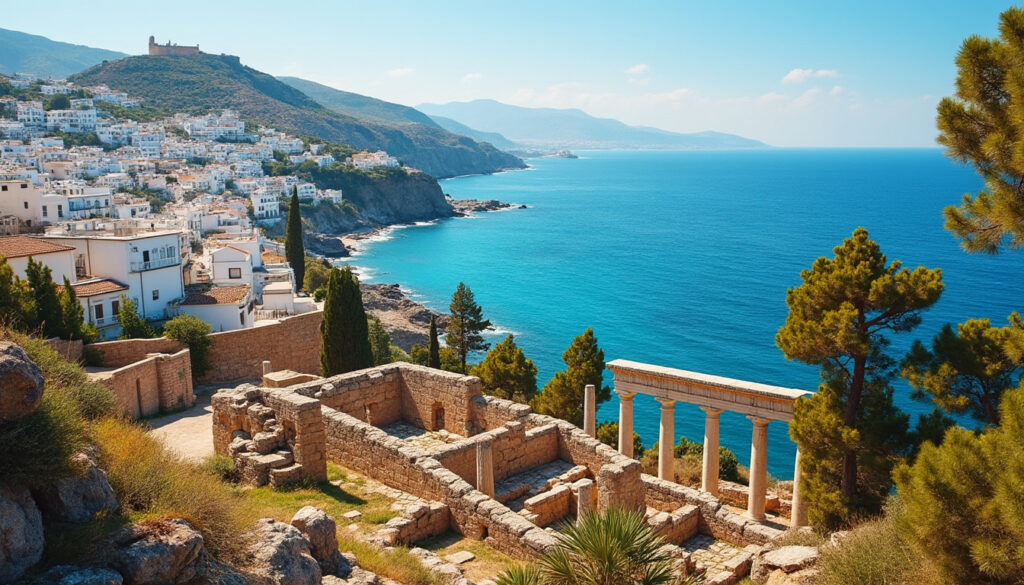
Walking between the ruins and the coastline
Extending the excursion around Tipaza
Days 5 to 7: reaching Oran and discovering the West
Choosing your route from Algiers
Urban heritage and Oran panoramas
Raï, terraces, and cuisine from the West
Practical movements and tips before departure
Getting around without weighing down the program
Formalities, customs, and visiting pace
A week in Algeria: three stops, a thousand impressions
In seven days, northern Algeria unveils a beautiful array of landscapes and atmospheres. Algiers opens the journey with its sloping alleyways, its history-laden facades, and its gardens where you can catch your breath between visits. In the Casbah, every turn seems to lead to a new fragment of memory; by the bay, the modern city reminds that the capital is also looking towards the future. Take the time to wander, to taste local specialties, and to leave room for unexpected discoveries.
In Tipaza, the pace naturally slows down. The ancient ruins, pine trees, and the Mediterranean create a striking backdrop, ideal for a day away from urban hustle. Bring water, comfortable shoes, and enough time to traverse the site without rushing. Depending on your itinerary, the surroundings—from Cherchell to Mount Chenoua—can prolong this interlude between heritage and coastline.
The stay continues in Oran, an energetic port city, where the views from Santa Cruz contrast with the bustle of the center and the raï tunes that sometimes accompany daily life. Between discovering Sidi El Houari, a stroll by the sea, and a delicious pause with a karantika, let yourself be carried away by its warm character. Keep a day for the coastline and check traffic conditions, especially in summer.
To fully enjoy this itinerary, choose realistic stops and verify transport schedules as well as access conditions to sites before departure. Spring and early autumn often offer a climate conducive to visits, while summer will appeal more to beach lovers. A few preparations—documents, payment methods, travel arrangements, and official recommendations—make the journey more peaceful. The main thing is to maintain flexibility: in Algeria, the best memories sometimes arise between two stops, at the turn of a conversation, a café, or a landscape glimpsed from the road.