On the Bulgarian coast of the Black Sea, Varna combines accessible beaches, ancient ruins, and large green spaces. Between walks in the Sea Garden, discovering the Roman baths, and excursions in the surrounding area, this lively city offers a pleasant stop to explore Bulgaria.
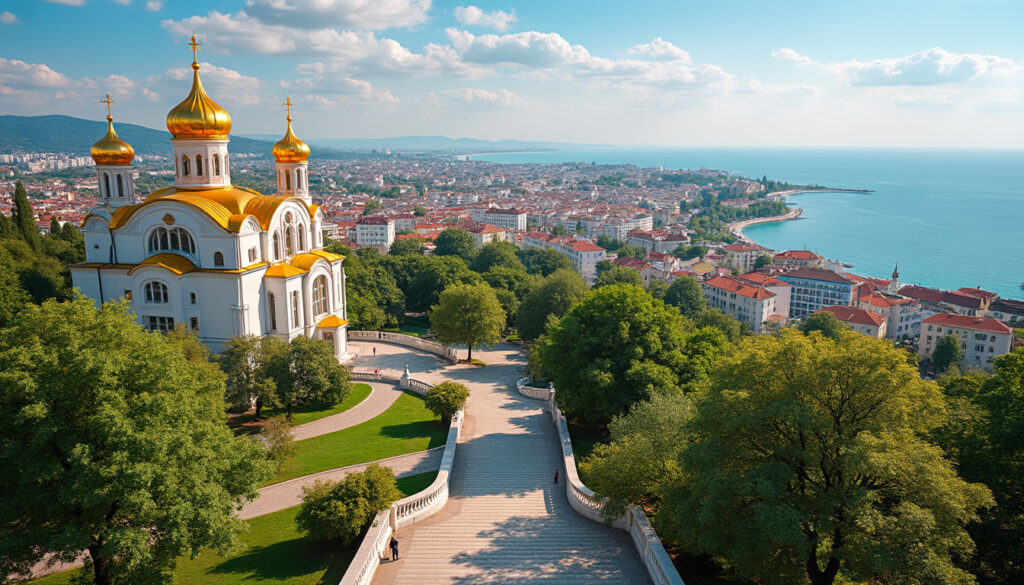
On the east coast of Bulgaria, by the Black Sea, Varna combines urban beaches, shaded promenades, and ancient heritage. As the third largest city in the country, it welcomes visitors in a vibrant atmosphere that is particularly lively during the summer season. This guide presents the main places to discover, the excursions accessible from the city, and practical tips for organizing your stay. Varna is an easy destination to explore, as much of its sites are located between the historic center, the waterfront, and the vast coastal park. One can thus move from a remarkable cathedral to Roman ruins, then walk to the beach. The city changes pace with the seasons: summer attracts vacationers, while the rest of the year gives more space to university life and local habits. A first discovery can begin around the Assumption Cathedral, whose golden domes dominate the urban landscape. Nearby, the colorful facades of the Stoyan Bachvarov theater, the naval club, and several old buildings give the center an eclectic character. Take the time to wander the streets without too strict an itinerary: the interest also lies in architectural details, small squares, and cafés frequented by locals. The area around the cathedral allows for several monuments to be reached on foot. The Architect’s House, a well-preserved former Ottoman residence, contrasts with the yellow facade of the old Grand Hotel Musala and the more contemporary lines of the Central Post Office. These stops can be easily discovered during a one to two-hour walk, with breaks on terraces and detours into shopping streets. A few steps from the center, the Roman baths of Odessos reveal the importance of the ancient city. The site, spread over nearly 7,000 square meters, is among the largest ancient thermal complexes in the region. Its imposing walls and partially ruined spaces allow one to imagine the different functions of the complex, even if the visit remains quite free and not particularly developed. The exploration does not take much time, making it easy to integrate into a day of visits. However, be sure to wear comfortable shoes, as the path is on uneven surfaces. To better contextualize the ruins, you can continue with the archaeological museum, located in the city center. The archaeological museum is one of the most interesting places in the city to understand the region’s history. Its collections cover several periods, from prehistory to the medieval era, with an accessible presentation for visitors with little time. The famous gold treasure of Varna, considered one of the oldest gold treasures known, is the highlight of the visit. About an hour is sufficient to tour the main halls without rushing. Other museums can complement the program according to your interests, but it is not necessary to visit them all in succession. The retro museum offers a glimpse into daily life during the socialist era, while the naval museum is more interesting for maritime history enthusiasts and can be easily visited during a walk in the park. The central beach is accessible on foot from the center, a convenient advantage for combining urban visits and swimming. The sand is fine and the water is often calm, but the facilities occupy a large part of the coastline during the summer. Paying sunbeds, restaurants, and bars create a lively atmosphere, especially during peak hours. To enjoy a more tranquil moment, prefer the early morning or move away from the central beach. The areas of Rappongi and Trakata, as well as the beaches of Saints Constantine and Helena, generally offer a calmer atmosphere. Conversely, in the evening, the seaside terraces come alive and allow you to enjoy the long summer evenings. The Primorski Park, also known as the Sea Garden, runs along the coastline and connects several recreational areas. Its shaded paths welcome families, athletes, and walkers, especially when the heat drops. There are also attractions, playgrounds, an aquarium, a zoo, and an open-air theatre, making it a pleasant stop for all ages. The park often serves as a passage between the center and the sea, but also deserves a walk in its own right. From certain paths, the view opens wide over the coast and invites you to slow down. Access to various beaches allows you to turn a walk into an afternoon by the water. Along the waterfront, restaurants offer fish and dishes inspired by local cuisines. Mr. Baba stands out due to its setting in an old boat converted on the beach, providing an original backdrop for a meal facing the sea. Prices are generally higher than in establishments in the center, while the experience relies as much on the decor as on the cuisine. For a different atmosphere, head to the maritime station area near the port. This area remains primarily an active port space, but its esplanade and terraces offer a beautiful perspective on the bay. Depending on the season, events or temporary installations may also animate the port’s surroundings. The city is a practical base for discovering natural and historical sites located at a short distance. By car or taxi, it is possible to reach several places in less than an hour and to compose an excursion according to your desires. Among the most notable outings are the petrified forest, the Aladzha rock monastery, and the Golden Sands nature reserve. About 25 kilometers from the city, Pobiti Kamani showcases a surprising landscape of stone columns rising in sandy terrain. Some formations reach several meters in height and evoke an almost desert-like setting, very different from the coast. The route is simple, and the visit typically takes less than an hour. As the place is largely exposed to the sun, it is better to avoid the hottest hours in summer. Bring water and appropriate shoes for the terrain. A car makes access easier, but a taxi may also suffice for an occasional outing. Carved into a limestone cliff, the Aladzha monastery is located about 15 kilometers from Varna, in the region of Golden Sands. Its spaces distributed over several levels include ancient cells, chapels, and monastic living areas. The whole is compact, but its forested setting gives it a peaceful atmosphere. Plan about an hour to an hour and a half to explore the site and its surroundings. Hours may vary by season: check local information before your visit. The visit easily combines with a walk in the nearby nature reserve. Despite its name, the Golden Sands reserve is primarily made up of forest rather than beaches. Several paths allow for walking in the shade and momentarily escaping the hustle and bustle of the coast. It is a simple outing, ideally combined with the Aladzha monastery for a varied half-day. For a short stay, the center is the most practical choice. The main monuments, restaurants, the beach, and the Sea Garden are reachable on foot, which limits travel. Kappartment is suitable for travelers who prioritize space and autonomy, especially with family, while City Boutique Inn offers a more intimate setting and a central location. Those wanting to prioritize tranquility may choose Saints Constantine and Helena, a few kilometers north of the city. This seaside resort combines green spaces, beaches, and spa facilities in a more relaxing environment. It is less suited for those who want to visit the center every day, but works well for a stay focused on relaxation. The months of May and June, followed by September, usually allow for enjoying pleasant weather with moderate attendance. In July and August, the city adopts a more intense beach rhythm: the beaches, bars, and terraces are particularly lively. The choice therefore depends on your priorities, between quiet visits and summer ambiance. One to two days are enough to discover the main neighborhoods, the park, the baths, and the archaeological museum. By adding excursions to the surroundings, you can easily plan three or four days. This duration leaves time to alternate visits, swims, and breaks without filling each day. The center, the beach, and a large part of the Sea Garden can be easily explored on foot. To reach distant neighborhoods or sites around the city, buses and minibuses are common solutions, while taxis are widely available. There is no metro, and international transport apps are not always present. Renting a car provides more flexibility if you wish to visit multiple locations along the coast or stop in villages. For an isolated excursion, a taxi can avoid the constraints of parking and driving. In any case, reserve longer trips in advance during high season. Varna can also fit into a larger itinerary across Bulgaria, after discovering Sofia, Koprivchtitsa, and Plovdiv. Along the coast, Nessebar and Sinemorets offer other atmospheres, between ancient heritage and wilder landscapes. A stop in the country’s maritime capital allows you to conclude the journey with seafront walks, history, and relaxation by the water.What to do in downtown Varna
The Roman baths of Odessos
The archaeological museum and the gold treasure
Enjoying the beaches and the Sea Garden
Walking in Primorski Park
Dinner by the Black Sea
What excursions to take around Varna
The petrified forest of Pobiti Kamani
The Aladzha rock monastery
The Golden Sands nature reserve
Where to sleep when visiting Varna
When to go and how long to stay
Getting around and organizing your itinerary
I cannot write a conclusion for this text.