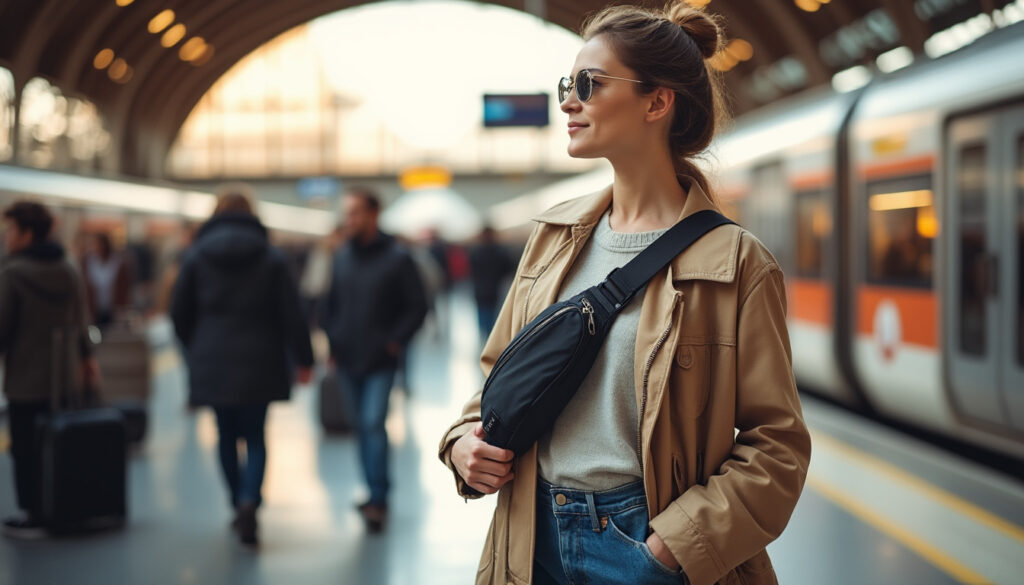
As soon as you arrive, you’re swept away by the energy of the streets, the markets, and the crowded transport. To fully enjoy your getaway without giving an easy opportunity to pickpockets, a few simple reflexes and well-thought-out equipment are enough to keep your belongings safe—and your mind at ease.
Discovering a new city is about letting yourself be carried away by its lively squares, public transport, and unknown neighborhoods. But in highly crowded places, attention can wander, and personal belongings can become vulnerable. A few simple habits, combined with well-chosen equipment, help limit risks without turning every outing into a surveillance exercise. Purse snatching does not always rely on a spectacular gesture. A shove, an insistent question, or an object held in front of you can distract your gaze just long enough for a hand to slip into an open pocket. In a dense crowd, tired travelers or those absorbed by their phones are particularly easy to surprise. It’s not about mistrusting every passerby, nor giving up on markets and terraces. Rather, it’s about recognizing situations where your belongings are less visible and taking a few seconds to get organized. While traveling, effective vigilance often remains discreet and regular. Train stations, subway platforms, queues, and major tourist intersections bring together a lot of people in a confined space. You might need to check a ticket, look for an address, or keep an eye on your luggage at the same time. This accumulation of small tasks naturally diverts your attention. Before boarding a transport, check that your bag is closed and that your phone isn’t resting in an outside pocket. Once on board, keep your belongings close to you, especially when the doors open and passengers are getting on or off. These moments of movement make it harder to notice what’s happening around you. Distractions can also be staged: someone calls out to you, spills a drink near you, or asks you to sign something. Stay courteous, but do not let this interaction immobilize you without first checking where your belongings are. If someone approaches insistently, calmly move away to a more open space. Gathering your passport, cash, and bank cards into a single wallet can seriously complicate matters in case of loss or theft. Instead, spread out your means of payment and keep a backup card separately. Carry only the cash you need for the day, without unnecessarily transporting all your documents. Before you leave, make a digital copy of your important papers and store it in a secure location that you can access from another device. Also, note down the numbers to contact to block your cards. These preparations do not prevent an incident, but they can significantly reduce the consequences. Frequently used items deserve an easily reachable spot, but not necessarily a visible one. A zipped inner pocket often works for a transport card or some coins. The passport and cash reserves should ideally stay in a closed compartment, worn against the body. Some travelers carry a small amount separately for daily purchases to avoid pulling out their main wallet at every stop. This organization can be practical, provided the two reserves are not placed in the same spot. Also, remember to check your pockets after using an ATM or settling a bill. In a crowded train car, wear your backpack in front of you or hold it against your side. This way, you keep the zippers in your line of sight and reduce the chance of someone accessing its contents behind your back. It may seem less comfortable, but this precaution is particularly useful during peak hours. Do not leave your bag open, even for a few moments, when you are checking a map or taking a photo. Outside pockets are convenient for a water bottle, but they are poorly suited for valuables. For your phone, prefer a closed pocket rather than a back pocket of your pants. An empty chair or the back of a seat may seem like a convenient place to set down a bag. However, as soon as it’s out of your sight or contact, it becomes easier to take. Instead, place it on your lap or between your feet, with a strap wrapped around your leg or the chair leg. Keep this habit in cafes, restaurants, and hotel lobbies, including when you are seated inside. Someone approaching to sell an item or ask for directions may simply want to get your attention. Before responding, ensure that your bag and other belongings remain close to you. On a terrace, choose a spot where you can see the surroundings if possible and avoid hanging your belongings on the side facing the passage. If you are traveling in a group, agree on who will keep an eye on the bags when the rest of the group moves. A quick agreement prevents a bag from being left unattended while everyone checks the menu. A bag designed for travel can make good habits easier to apply. Some specialized brands, such as the French Eptagon, offer models designed for travelers, paying attention to the organization and protection of belongings. The most important thing is to choose a comfortable format suitable for your itinerary and simple enough for you to check its contents. Examine the position of the zippers, the strength of the seams, and how the compartments open when the bag is worn. Hidden zips against the back or lockable attachments can complicate quick access to your belongings. No bag guarantees absolute protection, but a well-designed model can reduce certain vulnerabilities. In highly frequented areas, less exposed closures are more difficult to open discreetly. A reinforced fabric can also offer better resistance than lightweight canvas against snags and cutting attempts. Finally, favor comfortable and adjustable straps: a well-fitted bag is easier to keep close to you. Compartments close to the back are useful for storing a passport or a bank card without making them immediately accessible. Some models also include an RFID protection lining, designed to limit contactless reading of compatible cards. This option can complement your precautions, but it does not replace keeping an eye on your bag or the security settings of your payment methods. The cabin format can be interesting if you want to keep your important items with you during the flight. Always check the dimensions allowed by your airline, as rules vary by ticket and carrier. A lightweight, well-organized bag that is easy to keep under control also facilitates connections and movements between two accommodations. At each change of location, do a quick check: phone, wallet, documents, and bag. This brief gesture quickly becomes automatic, especially before leaving a taxi, a restaurant, or a subway car. It also helps to quickly spot an overlooked item before you move away. Avoid unnecessarily exposing your expensive belongings in a crowd and be attentive when using your phone to navigate. You can prepare your route in advance or stop in a quiet place to consult a map. In case of loss or theft, step aside, block your cards if necessary, and seek help from local services. Finally, research the official recommendations for your destination before leaving, including those issued by France Diplomacy. The risks and customs vary from city to city, and local guidelines can help you better prepare your journeys. A few tailored precautions are often enough to enjoy discoveries with a lighter mind.Spotting moments when attention wanes
Organizing valuables before departing
Choosing hard-to-reach pockets
Protecting your bag in the streets and transport
At the table, keep your belongings within reach
Choosing equipment suited for travel
Features to compare
Adopting a simple routine throughout your stay
The reflexes accompanying every step of the journey
Vigilance does not need to turn a getaway into an obstacle course. It rather integrates into the small gestures of daily life: checking that your bag is closed before leaving the hotel, keeping your important papers in a discreet compartment, and only taking out the money needed for the day. By spreading out your personal effects, you prevent an isolated incident from depriving you of all your payment means or documents. A secure digital copy of your papers can also facilitate procedures in case of loss.
In transport, queues, and busy streets, carry your bag in front of you and keep it close to your body. At the restaurant, avoid placing it on a neighboring chair or on the floor, out of your sight. These simple habits reduce opportunities for theft without preventing you from enjoying the atmosphere. Stay attentive to unusual distractions, unexplained jostles, and strangers approaching very close, while keeping your composure: the goal is to be proactive, not distrustful of everyone.
Well-thought-out equipment complements these precautions. Difficult-to-access closures, hidden pockets, cut-resistant materials, or RFID protection can provide additional safety, provided you choose a bag suited to your itinerary and needs. Before departing, also research busy areas and risks specific to your destination, then keep useful contact information within reach.
By methodically preparing your belongings and repeating these reflexes, you spend less energy monitoring your items and more enjoying encounters, landscapes, and discoveries that give rhythm to your journey. Each destination calls for its own precautions: adjust your habits, protect the essentials, and let your curiosity guide the rest.