
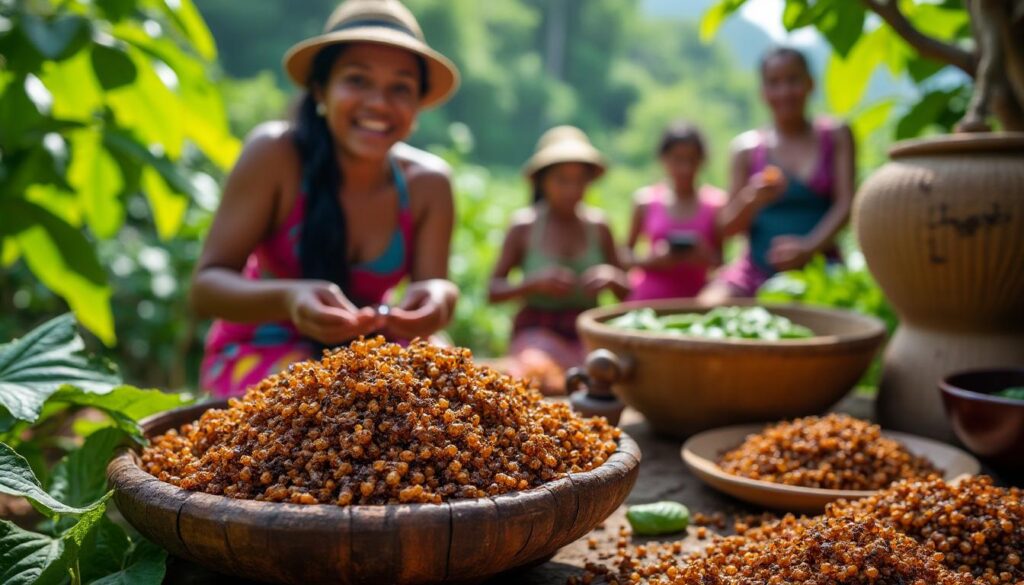
In the rich and vibrant context of Colombia, culinary tradition often reveals itself through astonishing and delicious practices. One of the most mysterious and surprising dishes is the consumption of hormigas culonas, these large roasted ants that emerge after the rains. This regional specialty, particularly prized in the department of Santander, reflects an ancestral know-how and a rich culture that ties gastronomy and heritage together. When prepared and tasted, these insects transform into a savory snack, offering a unique and memorable taste adventure to visitors of this beautiful South American nation.
Colombia does not settle for its natural beauty and vibrant culture. It also offers a singular culinary tradition, that of consuming edible ants. These insects, particularly the hormigas culonas, are a real delicacy in certain regions, like Santander. This article explores this fascinating tradition, revealing the preparation methods, unique flavors, and the reasons why these small creatures are so cherished.
The hormonigas culonas: a prized local dish
In Colombian culture, hormigas culonas, also known as “big-bottomed ants,” are a culinary specialty. These insects appear after the rains, reminiscent of the phenomenon of snails, and are appreciated for their unique taste. Known for their nutty flavor, they reveal a crunchy texture reminiscent of popcorn.
The culinary traditions surrounding these ants are very ancient. The indigenous people were already consuming these insects long before the arrival of Spanish colonizers. Today, their popularity is declining, but many renowned chefs continue to experiment with them, creating innovative dishes.
In the department of Santander, these ants are often used in surprising recipes. For instance, they can sometimes be found in pizzas or even in delicious ice creams. This culinary boldness is part of the charm of this culture.
Tasting workshop in Barichara
During a stay in Barichara, we had the chance to participate in a preparation workshop for these famous ants. Our local guide, full of passion, welcomed us into her kitchen and explained the importance of these insects. The ants are harvested after the rainy season when they emerge from their nests.
During the workshop, we learned to remove the wings from the ants. Although this might seem strange, the lack of movement from the frozen insects made the task less demanding. Once ready, these ants were roasted in a hot pan, thus developing a delicious smell, similar to popcorn.
The tasting moment was a true festival of flavors. These ants, once roasted, had a surprising taste reminiscent of bacon. Despite our hesitation, we savored this exceptional experience. It was an unusual culinary adventure, yet highly educational.
The ants, a sustainable tradition
The tradition of consuming hormigas culonas dates back to pre-Columbian times. The culinary heritage of indigenous peoples persists through the ages. Today, Colombian chefs spare no effort to include these insects in their menus.
In the region, it is not uncommon to find street vendors offering bags of roasted ants, just as one might find candied almonds in France. However, for connoisseurs, nothing compares to the flavors of a freshly prepared dish.
The popularity of edible insects transcends Colombian borders. In other regions of Latin America and even in Asia, insect consumption is a well-established practice. This trend, focused on sustainability, is paving the way for increased recognition.
The ant delicacies of Santander
Roasted ants are sold in various forms in Santander. They are often enjoyed as an appetizer. Their flavors, both unique and delicious, make them a favored snack among locals. Creations such as ant ice cream surprise visitors and spark curiosity. In Guane, this flavor is even the only one available, offering a glimpse into the culinary boldness of the region.
The varied tastes and textures of these insects make them a fascinating subject for culinary exploration. For those daring enough to take the plunge, discovering edible ants often proves to be a memorable experience. The rich and distinct flavors make them even more appealing for adventurous foodies.
If you are eager to try the adventure without leaving the comfort of your home, many articles and online resources, such as the fabulous world of traveling insects, provide an insight into this fascinating tradition.
During our trip to Colombia, we had the opportunity to dive into a unique culinary tradition: tasting hormigas culonas, these roasted ants that emerge after the rainy season. This atypical experience allowed us to discover not only a regional specialty but also an integral part of Santander’s culture. Participating in a preparation workshop in the kitchen of a local resident was a memorable moment, combining friendliness and learning.
The hormigas culonas, beyond their surprising appearance, are recognized for their flavor, which resembles that of hazelnuts and bacon. Their appreciation goes far beyond mere curiosity; they embody a nutritional richness, highly valued in kitchens around the world. In this country, this delicate dish transcends culinary prejudices and demonstrates the ingenuity of Colombians in incorporating unexpected ingredients into their dishes.
Through this adventure, we not only tasted innovative dishes but also learned to respect and appreciate ancestral food practices. Far from Western food stereotypes, the consumption of insects such as hormigas culonas reveals a unique cultural connection with nature, a culture of sustainability, and a deep respect for local resources. These insects, thanks to their meticulous preparation, become a true savory delight.
Our hands-on experience, up close to Colombian tradition, opened our minds to new culinary perspectives. The tradition of edible ants in Colombia, with its rich history and unusual flavors, is a tribute to the biodiversity and gastronomic creativity of the region. This discovery not only delighted us but also culturally enriched us.


