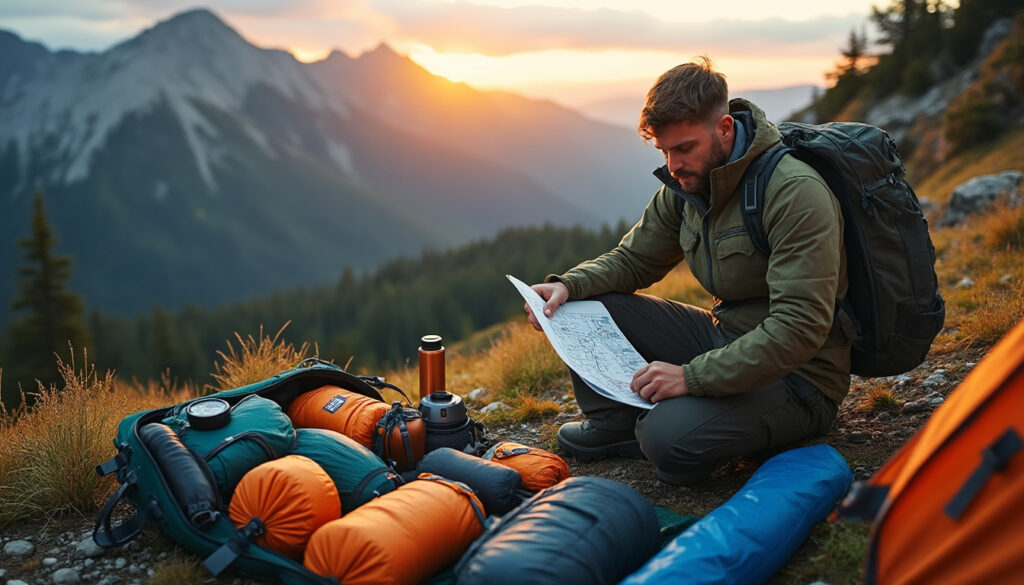
Leaving marked trails, moving at one’s own pace, and allowing room for the unexpected: the adventure of independence is a dream. However, behind every beautiful expedition lies meticulous preparation, from the itinerary to the equipment. With a few essential guidelines, even a modest trip can take on the allure of great exploration.
Stepping off the beaten path to proceed at one’s own rhythm promises unexpected landscapes but also a fair share of surprises. To fully enjoy an expedition, even a short one, it is necessary to prepare the objective, study the terrain, choose reliable gear, and anticipate safety issues. The adventure starts long before the first step: it is built in the details, which then adapt to reality.
Walking for several days, paddling along a coast, or crossing an isolated region requires more than just a desire for fresh air. In autonomy, every decision counts: the daily distance, water reserves, places to sleep, and how to react if the weather turns bad. This preparation does not detract from the spontaneity of the journey. On the contrary, it allows for better welcoming of the unexpected without putting oneself in unnecessary difficulty.
The stories of great travelers, like those of Mike Horn, feed the imagination and remind us of the power of preparation. Exploration, however, is not reserved for extreme lands or seasoned adventurers. A few days’ hike or a kayak course can already offer that rare sensation of progressing under one’s own power. The right starting point is to choose an adventure suited to one’s experience.
Define a specific and realistic objective
Choose an adventure that fits
Before drawing a line on a map, formulate your project in a simple sentence. “Connecting two mountain villages in four days” is more concrete than “going to discover the Alps.” A well-defined objective helps establish the duration, the level of effort, and the necessary equipment.
There is a great temptation to add diversions, summits, and ambitious stages. However, a route that is too packed leaves little room for rest and surprises. It is better to have a reasonable loop completed serenely than an oversized journey that turns every day into a race against time. Keep a margin to slow down.
Also, evaluate your experience and that of the people accompanying you. A first independent outing should not combine technical terrain, uncertain weather, and long stages. Starting at one’s own level is not timid: it is a smart way to build skills and gain confidence.
Study the itinerary and the conditions of the terrain
Prepare your route using several sources
A map provides an overview, but the details of the terrain are often found in topoguides, local maps, and recent feedback from other travelers. Identify water points, shelters, villages, and resupply options. Depending on the region, also check the condition of the trails, the schedule of a ferry, or access restrictions.
Check seasonal forecasts and weather information as the departure approaches. A pass can become dangerous in a storm, while a watercourse known to be easy to traverse can swell after heavy rains. Prepare fallback routes and identify places where you can shorten your journey. This work makes decisions simpler on-site.
For a motorized trip, preparation takes another form, but the spirit remains the same: knowing the distances, stages, and alternative options. This guide for planning a van road trip can help structure an itinerary without turning every day into a rigid program. Always leave room for discoveries that are not on the map.
Prepare without trying to control everything
Good preparation is not about eliminating uncertainty, but knowing what to do when it arises. Note the stages, distances, and possible exit points, then share this information with a close person. Also keep offline copies of your maps in case the network becomes inaccessible.
Tourist offices, refuge guardians, and locals can provide valuable information, sometimes fresher than what is available online. Ask them about current conditions and be ready to modify the plan. On the ground, reliable local data is often worth more than an itinerary prepared months in advance.
Prepare your body and mind
A stage that seems short on paper can feel endless with a heavy backpack and sustained elevation change. A few weeks before departure, gradually increase the duration of your outings. Train with the pack you intend to carry: you will be able to test its adjustment, your shoes, and your hydration habits.
These outings also serve to spot minor issues before they become cumbersome. A rubbing seam, a poorly adjusted strap, or stiff shoes usually show up during trials. It is better to discover these details close to home than in the middle of a long crossing.
The mental aspect deserves the same attention. Fatigue, solitude, or a rainy day can affect morale, even when everything goes according to plan. Learn to distinguish a temporary difficulty from a true danger and plan flexible daily goals. Turning back or stopping is sometimes the most responsible decision, not a failure.
Choose light, reliable, and familiar equipment
Test your gear before departure
The best equipment is not necessarily the most technical: it is the one that meets your needs and that you know how to use. Set up your tent before the trip, light the stove, and test your filtration system. An unknown manipulation becomes stressful when night falls or rain sets in.
Prepare a list, then weigh the items and honestly ask yourself what each one will be for. Superfluous items weigh down the pack and tire the legs. However, avoid drastically reducing water supplies, warm clothing, or first aid kits: weight savings should not compromise your safety.
For car camping, a rooftop tent can simplify some stages and open up possibilities for routes. Discover this idea of road trip with a rooftop tent in Namibia and Botswana, for example. However, the choice of this type of shelter depends on the vehicle, local conditions, and authorized parking places.
Adapt the equipment to the journey
A versatile piece of equipment allows for limiting belongings without sacrificing essential comfort. Quick-drying clothing, rain protection, and a reliable means of navigation are often more useful than an accumulation of gadgets. Each item should have a clear function, especially when carrying everything on your back.
If you are torn between classic bivouac and a tent set up on a vehicle, compare the advantages according to your route. This article on the appeal of rooftop tents offers insights for considering this way of sleeping outdoors. A suitable shelter can make nights simpler, but it does not relieve the need to check the weather or respect camping rules.
Anticipate safety and communications
Independence does not mean disappearing without notice. Share your itinerary, your dates, and your likely stages with a trusted person. Agree on a contact time and a clear procedure if you do not provide news.
In areas without mobile coverage, inquire about renting a distress beacon or a satellite phone. These tools can facilitate the triggering of rescue when an accident or serious problem occurs far from roads. Before leaving, learn how to use them and check their battery life.
Inform yourself about emergency numbers and available rescue means in the area. Also, check that your insurance actually covers the planned activities, especially in the mountains, at sea, or abroad. Proper coverage and a first aid kit known to all participants prevent certain unpleasant surprises. Finally, consult local alerts just before departure.
Respect the places traversed and their inhabitants
An isolated itinerary often passes through inhabited areas, even when they seem far from everything. Ask for permission before camping on private land and prefer areas where bivouacking is permitted. Buy from local businesses when possible: these exchanges support communities and enrich the journey.
Reduce your impact by carrying out your waste, limiting noise, and avoiding disturbing wildlife. Leave the bivouac site in the condition you found it, or even a bit cleaner. Traveling with respect also means accepting not to appropriate everything and following the customs of the territory.
Meeting is also prepared by an open and attentive attitude. A few words in the local language, a tactfully asked question, or a meal purchased in the village can sometimes create memorable exchanges. The locals are not just a passing decor: their knowledge of the terrain can also help you better understand local customs and conditions.
Start close to home, then broaden the horizon
It is not necessary to cross a desert to taste the spirit of expedition. A few days on a regional trail, a bike loop, or a kayak outing can already teach you to manage your pace and your provisions. These first experiences reveal what works and what needs adjusting.
After each trip, take time to evaluate. Note unnecessary items, insufficient reserves, and stages that are too long. These concrete observations will be more valuable than a long list of theoretical equipment to prepare for the next outing.
Once your first markers are acquired, it becomes possible to aim further or extend the journey. A mountain crossing, a coastal route, or several nights away from villages require more organization, but skills are built progressively. Every well-prepared adventure opens the door to the next one, with a bit more confidence and always a share of the unknown.
Make each step a field of exploration
An independent journey begins long before the first step. It takes shape when a desire becomes a precise project: to follow a valley, to cross a pass, or to paddle along a coast. By defining an objective suited to one’s experience, one can build a coherent itinerary, plan the stages, and measure the necessary effort. Maps, guides, and information gathered from locals then help transform an idea into a concrete route, without erasing all traces of the unknown.
Preparation benefits from being gradual. A few hikes with the pack intended for the trip quickly reveal what works and what needs to change: uncomfortable shoes, too heavy gear, insufficient water supply. Testing your gear in conditions similar to reality also helps you get to know your actions better and remain available when the weather or terrain requires a change of plan. The goal is not to foresee everything, but to have solid markers to make good decisions.
Safety is an integral part of this freedom. Transmitting your itinerary to a trusted person, agreeing on contact times, and checking available means of communication are simple but valuable reflexes. Depending on the destination, it is also necessary to inform oneself about rescues, local rules, and the guarantees of your insurance. Knowing how to interrupt a stage or turn back is part of the preparation just as much as choosing your direction.
Finally, independence does not mean traveling without regard for others. Respecting bivouac sites, limiting one’s impact, and supporting local businesses give another depth to the journey. A first expedition does not need to be far-flung or spectacular: a few days on a familiar trail can already teach you to manage your pace, resources, and surprises. As experience settles in, the itinerary can lengthen, the terrain can become more demanding, and horizons can open up.