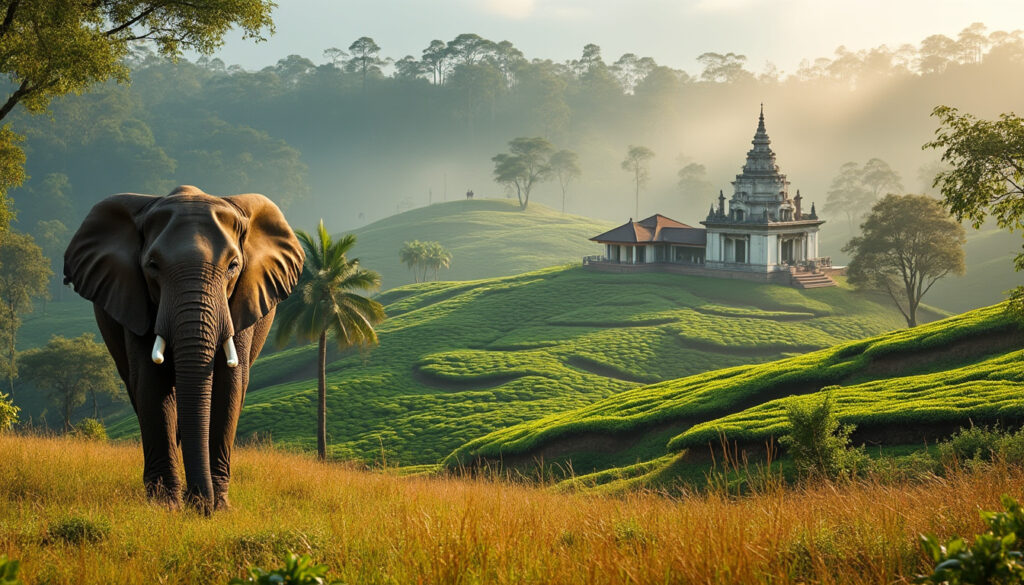
In 10 days in Sri Lanka, journey from sacred temples to emerald tea hills, then head out on safari to encounter elephants. A tailor-made tour lets you discover this island of a thousand faces at your own pace, without missing a moment of its magic.
In ten days, Sri Lanka offers a concentrated blend of landscapes and emotions: from historic Buddhist temples to mountain tea plantations, and on to the trails where wild elephants roam. A well-planned itinerary connects these worlds without turning the trip into a race against the clock. With a private driver and stops tailored to your preferences, every journey becomes an integral part of the adventure.
Why choose a tailor-made tour in Sri Lanka?
On the map, the island looks compact; on the road, the distances and terrain invite you to take your time. A customized tour helps organize travel, choose well-located accommodation, and preserve real breaks between visits. This allows you to focus on ancient sites, nature experiences, or a few relaxing moments by the ocean.
Travelers who want to venture beyond the classic routes can also take inspiration from these tips for exploring Sri Lanka differently and discovering its hidden treasures. A specialist local agency, such as Mai Globe Travels, can then tailor the route to the season, your preferred level of comfort, and your pace. Days flow more smoothly, without sacrificing spontaneous discoveries.
Days 1 to 3: the ancient cities of the Cultural Triangle
After arriving, head towards the center of the island, where royal remains and sanctuaries tell a story spanning several millennia. Three days in the Cultural Triangle offer a striking first glimpse of Sri Lanka’s heritage. The morning light is especially beautiful here, and visits are often best started early.
Sigiriya, Dambulla and Polonnaruwa
At Sigiriya, climbing the famous rock is a challenge, but the reward is spectacular: vast views over the canopy and surrounding countryside. Along the way, landscaped gardens and ancient frescoes reveal the refinement of this former citadel. Setting out before the heat sets in makes the climb more enjoyable.
At Dambulla, the cave temple brings together statues and paintings in caves carved into the hillside. Later, the ruins of Polonnaruwa can be explored on foot or by bicycle, amid stupas, ponds, and stone figures. Macaques sometimes appear near the paths, as if keeping watch over the ruins.
Days 4 and 5: Kandy and the first mountain foothills
The road leads to Kandy, a former royal capital nestled around a lake and surrounded by hills. The city offers a change of pace after the major archaeological sites: lively markets, gardens, and bustling streets create a more urban setting. For a quieter stop, a walk along the water may be all it takes to soak up the atmosphere.
A sanctuary in the heart of the city
The Temple of the Tooth is one of the most revered sites in Sri Lankan Buddhism. Visitors can observe the worshippers’ rituals, floral offerings, and the refined architectural details in an atmosphere of reverence. Visitors should wear clothing that covers their shoulders and legs.
The next day, the landscape begins to undulate and the air grows cooler as the road climbs higher. It is a lovely transition to the highlands, where the plantations already hint at what lies ahead. Packing light but warm clothing makes it comfortable to enjoy the climb in altitude.
Days 6 and 7: tea hills and a scenic train ride
In the mountains, tea fields trace emerald-green curves across the slopes. The train journey to Nuwara Eliya is one of the highlights of the stay: open carriages, villages clinging to the hills, and waterfalls slowly glide past the windows. It is best to keep your camera close at hand, while also allowing the scenery to make an impression without a screen.
Along the tea pickers’ paths
A factory visit reveals the steps that turn freshly picked leaves into Ceylon tea. A tasting lets you compare the flavors, sometimes floral, sometimes more robust, depending on the altitude and process. In the plantations, rows of tea bushes seem to stretch endlessly.
A guided walk offers a closer look at this living landscape and a better understanding of the tea pickers’ work. Mornings can be cool, while clouds sometimes envelop the peaks within minutes. A light jacket and comfortable shoes soon prove useful.
Days 8 and 9: safari in the southern plains
As you leave the mountains, the scenery becomes warmer and drier. In Yala or Udawalawe National Parks, the safari takes place in a four-wheel-drive vehicle, along tracks lined with tall grass and waterholes. Animals sometimes appear around a bend, and sometimes only after a long, silent wait.
Encountering wild animals
Herds of elephants are often the stars of the day, but buffalo, crocodiles, and birds also live in these habitats. In Yala, some visitors hope to spot a leopard; sightings are unpredictable and depend on the conditions at the time. An experienced guide can help spot tracks and observe wildlife without disturbing it.
At sunrise, the light filters through the dust, giving the plains a golden hue. Spending the night in a nearby lodge extends the experience, with the sounds of the bush as a backdrop. However, it is worth remembering that a safari is an exploration of a natural environment, not a guarantee of wildlife sightings.
Day 10: a final stop between the sea and heritage
For the final day, a stop on the southern coast offers a welcome contrast after the trails and mountains. You can choose a golden-sand beach to relax, or head to Galle, where the ramparts and narrow streets still bear the mark of its colonial history. The itinerary depends above all on your flight time and the journey to the airport.
In Galle, historic facades, small shops, and cafés invite you to wander without a set route. On the coast, a table overlooking the ocean is the perfect place to enjoy one last meal before departure. Leaving some extra time for the transfer helps you avoid ending the trip in a rush.
When to go and how to adjust the pace
From December to April, the South and the highlands generally enjoy favorable conditions for this itinerary. However, the climate varies by region and monsoon, so it is worth checking your departure dates when planning the trip. In ten days, it is best to limit long road journeys and avoid changing accommodation too often.
A private driver makes transfers easier and allows you to stop whenever a scenic view or market catches your eye. Those with two weeks to spare can extend the route to the beaches of the east coast near Trincomalee, or to the Sinharaja rainforest. A tailor-made trip lets you choose both the duration and the level of comfort and types of stops.
Flavors to discover along the way
In Sri Lanka, meals extend the journey through the aromas of spices, herbs, and fresh produce. A rice and curry usually consists of rice served with several dishes: vegetables, dhal, spicy sambols, and sometimes fish. Each plate varies according to the region and the habits of the household that prepared it.
On the coast, grilled seafood often features on the menu, while in the mountains, a cup of freshly brewed tea pairs perfectly with the cool air. Hoppers, small bowl-shaped pancakes, are enjoyed for breakfast or as a snack, sometimes with spicy fillings. Roti and tropical fruits—mango, pineapple, or dragon fruit—round out the culinary discoveries between visits.
To enjoy this variety, it is best to leave room for spontaneity and ask locals or your guide for recommendations. A stop at a small family-run restaurant may reveal a curry different from the one you tried the day before, milder or spicier. These breaks also offer a chance to slow down and observe everyday life around you.
Planning your stops for a smoother trip
Religious sites call for respectful clothing, and it is often necessary to remove your shoes before entering a sanctuary. A light scarf, a water bottle, and sun protection are useful on sightseeing days. For hikes or safaris, choose comfortable clothing suited to local conditions.
Journeys can take longer than the distances shown on a map might suggest, especially in mountainous areas. A realistic itinerary includes breaks and avoids scheduling too many activities on the same day. This way, the trip leaves room for encounters, detours, and unexpected moments.
Sri Lanka in 10 days: a trip to shape at your own pace
In ten days, Sri Lanka unfolds a succession of remarkably varied landscapes and atmospheres. In the Cultural Triangle, temples, frescoes, and ancient cities tell a story spanning millennia. At Sigiriya, climbing the rock early in the morning reveals jungle stretching as far as the eye can see; at Dambulla and Polonnaruwa, each visit offers a new gateway to the island’s Buddhist heritage.
The road continues to Kandy, then climbs into the tea hills. The train journey, through plantations, misty valleys, and waterfalls, is one of those experiences best savored without rushing. In Nuwara Eliya, a stop at a factory offers a glimpse into the production of Ceylon tea, followed by a walk among the rows of tea bushes. A private driver helps connect these stops while minimizing transport hassles and leaving more room for spontaneous discoveries.
Further south, the scenery changes to dry plains and nature reserves. A safari in Yala or Udawalawe offers the chance to observe elephants, buffalo, and crocodiles in their natural habitat. The more elusive leopard may occasionally be glimpsed. Depending on your preferences, an overnight stay near the park extends the immersion, while a stop in Galle or at a southern beach brings a gentler pace to the trip.
A tailor-made tour can also be shaped around the pleasures of the table: rice and curry, hoppers, tropical fruits, grilled fish on the coast, and a cup of tea in the highlands. The season you choose, your preferred level of comfort, and the time spent in each region all shape the itinerary. For a slower-paced trip, two weeks allow you to add the beaches of the east coast or the Sinharaja rainforest, without giving up the stops that make this journey so rewarding.