
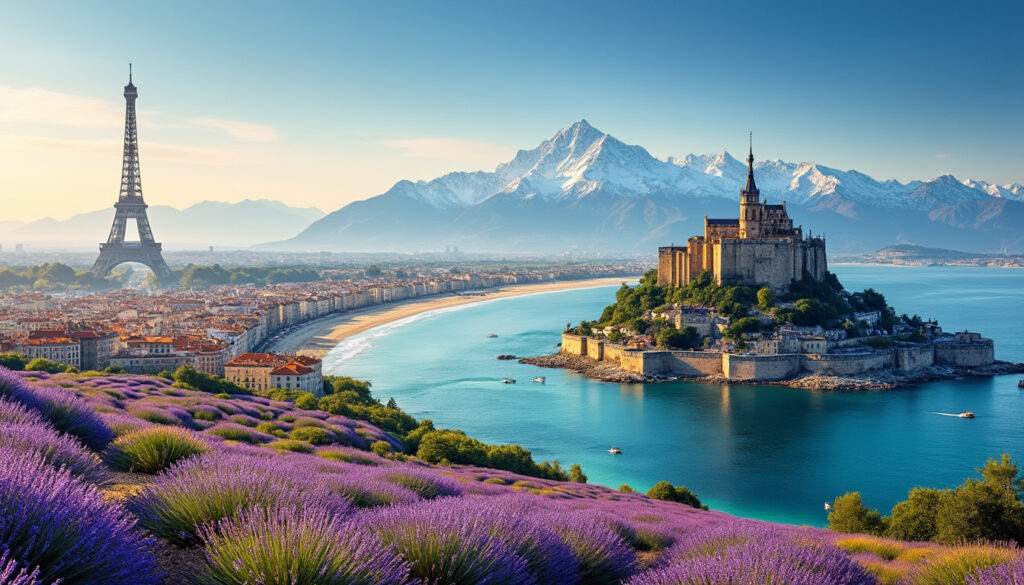
From the Breton cliffs to the Alpine peaks, from rural villages to Mediterranean beaches, France offers a great variety of landscapes to discover. The best destinations depend on your desires: sea, mountain, heritage, or a peaceful stay.
From the cliffs of the English Channel to the summits of the Alps, France brings together an astonishing variety of landscapes in an easily navigable territory. This guide presents the regions and destinations worth a detour, with ideas tailored to desires for sea, mountain, countryside, or heritage. It also helps to spot quieter places, away from the busiest routes, to imagine a stay at one’s own pace. Choosing where to go starts with a simple question: what atmosphere are you looking for? The Atlantic coastline offers long beaches and open horizons, while the Mediterranean attracts with its light and creeks. Inland, the mountains, valleys, and villages invite you to slow down. France is suitable for both a short stay and itinerant vacations. The distances between certain cities and natural sites allow for varied stages, provided that you don’t want to see everything in a few days. A long weekend can thus become a true interlude, as this article discusses the art of escaping during a long weekend. Each region offers several ways to travel. Well-known sites provide useful reference points, but lesser-known areas often reserve the most peaceful experiences. Here are some suggestions for selecting a destination and starting to build a coherent itinerary. This vast region juxtaposes very different landscapes: the volcanic reliefs of the Central Massif, the plateaus of Vercors, and the high mountains of the Alps. Lake Annecy is suitable for walks, swimming, and cycling outings, while the Mont-Blanc massif attracts lovers of high-altitude panoramas. Further south, the gorges of the Ardèche allow for the discovery of limestone cliffs and rivers by canoe. For more calm, the mountains of Cantal, Aubrac, and Livradois-Forez offer vast spaces and less-frequented hiking trails. The Drôme Valley provides a sunnier atmosphere, between villages and hilly landscapes. Allow for generous travel times: the terrain makes some distances longer than they appear on a map. Dijon and Beaune form practical bases for exploring Burgundy’s heritage and wine landscapes. The Route des Grands Crus crosses famous villages, while Vézelay impresses visitors with its perched site and history. In Besançon, the citadel dominates a bend in the Doubs and complements a stay focused on architecture. The Jura, the Morvan, and the Doubs invite you to discover more nature, with waterfalls, forests, lakes, and valleys. These areas are suitable for travelers who wish to alternate walking, small roads, and stops in quiet towns. The region also lends itself to gourmet getaways, thanks to its specialties and vineyards. Brittany stands out with its ports, islands, and paths exposed to changing light. Saint-Malo and its ramparts, the Pink Granite Coast, and the Crozon peninsula offer very different maritime landscapes. The Gulf of Morbihan, more sheltered, is easily discovered along the water or from its coastal paths. For a less animated escape, the Etel estuary and the island of Groix invite you to slow down. The southern coast of Morbihan also offers beautiful stops, with beaches and villages to explore outside the busiest periods. In spring or autumn, the region reveals a particularly changing and luminous atmosphere. The castles of Chambord and Chenonceau are among the most famous visits in the Loire Valley. Amboise and Blois allow for the combination of heritage, urban walks, and stops by the river. To travel through the region without multiplying car trips, the Loire à Vélo route connects several pleasant stages. The Sologne, Berry, and small Loire towns sketch a more discreet facet of the region. Forests, ponds, and small paths encourage taking your time, especially during a cycling stay. Outside the major sites, the wild banks of the Loire offer beautiful walking spaces. In Corsica, the sea and mountains coexist at a short distance, even if the winding roads make traveling longer than expected. Bonifacio impresses with its citadel and cliffs, while Porto-Vecchio serves as a starting point for several beaches. Calvi and Cap Corse combine heritage, villages, and coastal panoramas. Corte allows you to discover the interior of the island and access more mountainous landscapes. The Calanques de Piana are among the most striking sites, with their red rocks above the sea. The GR20, demanding and challenging, is mainly for experienced hikers who are well prepared. Strasbourg attracts for its cathedral and the Petite France district, while Reims combines heritage and Champagne culture. The Alsace Wine Route connects villages like Eguisheim and Riquewihr through the hills. The Vosges offer another atmosphere, filled with forests, lakes, and high-altitude walks. Gérardmer and Lake Blanc are good starting points for outdoor activities. To the west, the Ardennes delight with their wooded spaces, while Verdun allows for exploring memory sites. Épernay is an interesting stop to discover the cellars and Champagne landscapes. The Baie de Somme and the Côte d’Opale give this region its maritime character, with vast beaches, dunes, and cliffs. The Blanc-Nez and Gris-Nez caps offer remarkable viewpoints on clear days. Lille, dynamic and cultural, provides a welcome urban contrast. The Audomarois marshes are explored by boat, amid landscapes shaped by water. Avesnois offers a green countryside, while Amiens intertwines its cathedral with the hortillonnages. In Lens, the Louvre-Lens museum also testifies to the cultural transformation of the former coal basin. Paris concentrates museums, monuments, and neighborhoods with varied identities, but the region also reserves numerous accessible getaways. Versailles impresses with its palace and gardens, while the Fontainebleau forest combines heritage and outdoor activities. Disneyland Paris is a popular option for a family stay. The Chevreuse Valley and the Rambouillet forest are suitable for nature outings. Provins offers a medieval discovery, while Auvers-sur-Oise allows for following in the footsteps of Impressionist painters. The banks of the Marne invite for a more tranquil walk near the capital. Étretat is famous for its cliffs and arches, while Mont-Saint-Michel attracts with its architecture and the rhythm of the tides. The D-Day beaches offer a strong historical tour, often completed by a stop in Bayeux. Honfleur and Deauville provide a port or seaside atmosphere, depending on the chosen stop. The Cotentin and La Hague are appealing for their wilder coastline. Normandy Switzerland, around Clécy, is suitable for outdoor activities, including kayaking and hiking. For a peaceful stay, the Perche alternates villages, bocage landscapes, and small country roads. Bordeaux is a convenient base for visiting the city and reaching the surrounding vineyards. The Arcachon basin, the Dune of Pilat, and the islands of Ré and Oléron offer varied Atlantic landscapes. Further south, the Basque Country combines beaches, reliefs, and local culture around Biarritz, Saint-Jean-de-Luz, and Espelette. The black Périgord is conducive to a stay combining villages, gastronomy, and prehistoric sites. The Landes offer long beaches and pine forests, while the Creuse caters to desires for calmness. To discover the countryside, Béarn and the Vézère Valley provide beautiful alternatives to coastal resorts. Carcassonne and its ramparts, the Pont du Gard, and the Canal du Midi compose some of the most striking heritage stops. Toulouse and Montpellier provide two urban anchors, with different access to the rest of the region. The Mediterranean coastline easily combines with the discovery of cities and historical sites. The Cévennes and the gorges of the Tarn offer powerful landscapes, ideal for hiking and water activities. On the Aubrac, the open plateaus invite you to traverse the roads at a slow pace. To organize nature outings in Hérault, from Montpellier to Saint-Guilhem-le-Désert, this guide to outdoor activities provides ideas for walks and getaways. Nantes blends heritage and creativity, while Angers can be explored on foot around its castle and historic center. La Baule, Noirmoutier, and the island of Yeu allow for a vacation focused on the sea. The bike paths make several areas pleasant to explore without a car. The salt marshes of Guérande reveal a landscape shaped by salt work. The Saumur area combines vineyards, castles, and cycling routes, while Le Mans retains a remarkable old center. The Puy du Fou complements the vacation possibilities, especially for families. The calanques between Marseille and Cassis are among the emblematic landscapes of the region. Nice allows for exploration of the Côte d’Azur, and Avignon charms with its historical heritage. Further inland, the gorges of Verdon invite hiking, kayaking, and panoramic observations. The Luberon and its villages are a popular option to discover Provence at a gentler pace. The Camargue offers open spaces to observe horses and flamingos, while the Mercantour caters to mountain desires. In summer, it is advisable to book early and verify access conditions to the busiest sites. For a wild atmosphere, the Breton coasts, the Cotentin, and the Côte d’Opale offer long walks, cliffs, and landscapes exposed to the wind. Swimming enthusiasts and coastal village lovers may prefer Vendée, Charente-Maritime, or the Atlantic islands. In the Mediterranean, the creeks, beaches, and southern light create a different scenery. The choice also depends on the desired pace. Some resorts offer numerous activities and practical services, while more remote areas charm with their tranquility. To enjoy the coastline during high season, consider exploring around famous places rather than focusing on a single site. The Alps are suitable for travelers in search of spectacular peaks, high-altitude lakes, and grand pathways. The Pyrenees, Central Massif, Jura, and Vosges offer each a different view of the mountain, more or less steep and frequented. The volcanoes of Auvergne, for instance, appeal with their accessible reliefs and vast horizons. Before choosing, assess your level, the season, and the activities sought. A family walk near a lake doesn’t require the same preparation as a long hike at high altitude. Less popular mountain ranges can offer a good balance of nature, calm, and budget. Aveyron, the Cévennes, Morvan, and Berry are among the territories conducive to green stays. Characterful villages, plateaus, forests, and small roads invite frequent stops. In Burgundy, the wine landscapes add a gastronomic dimension to the discovery. The Périgord, Ardèche, and Drôme are suitable for those who wish to combine nature and heritage. In these regions, it is sometimes better to choose a specific sector rather than chaining long stages. Well-situated accommodation facilitates visits and leaves more room for unexpected occurrences. Start by defining the available duration and the type of vacation you are seeking. A weekend can focus on a city and its surroundings, while a week allows for exploring a region in several stages. Avoid overly ambitious itineraries: it’s better to enjoy a few places than to spend most of the stay on the road. The maps of regions and reliefs help to understand distances, mountains, and large natural units. They are useful for combining hiking, biking, cultural visits, or stops by the water. Departure times also matter, as attendance and weather conditions vary greatly depending on areas. To compare travel habits in France with global developments, consult these figures and trends in international tourism. If your project extends beyond borders, gather information in advance about local rules and precautions to take. This article about traveling while being a cannabis consumer notably highlights the importance of knowing the applicable legislation for each destination. French destinations are more easily chosen when starting from a precise desire: contemplating the sea, hiking in the mountains, visiting villages, or discovering a city. A region can then serve as a framework for composing a balanced route, without multiplying accommodation changes. Also, keep time for detours, markets, and unexpected stops. To prepare for longer vacations and compare flight options, another type of project can also take shape. This comparison of flights to the Dominican Republic presents the offers of Air France, Air Caraïbes, and Corsair to organize a trip outside of France. Desires change, but attentive preparation always allows for better choices in your stages.The best destinations to travel in France according to your desires
The French regions to discover
Auvergne-Rhône-Alpes, from volcanoes to alpine peaks
Burgundy-Franche-Comté, between vineyards and forests
Brittany, a coast shaped by the wind
Centre-Val de Loire, castles and cycling routes
Corsica, an island of contrasts
Grand Est, historic cities and mountain landscapes
Hauts-de-France, vast horizons and heritage
Île-de-France, well beyond Paris
Normandy, between cliffs, history, and countryside
Nouvelle-Aquitaine, from ocean beaches to Périgord
Occitanie, between Mediterranean and wide-open spaces
Pays de la Loire, a region easy to navigate
Provence-Alpes-Côte d’Azur, between sea and alpine reliefs
Where to go in France by the sea
Where to go in the mountains to walk and breathe
Where to travel to the countryside to slow down
Preparing a stay suited to your desires
Exploring France at your own pace
French destinations suited to every desire
Choosing among the best destinations to travel in France primarily depends on the experience you want to live. To breathe the sea air and walk facing the waves, Brittany, Normandy, and Côte d’Opale offer spectacular coasts, ports, and vast beaches. Further south, the Basque Country combines ocean, characterful villages, and local culture, while the Mediterranean attracts for its creeks, sun, and landscapes bathed in light.
Mountain lovers can choose from several atmospheres. The Alps charm with their high peaks and lakes, while the Pyrenees offer wilder reliefs. For peaceful hikes and less-frequented landscapes, the Jura, Vosges, and Central Massif make great alternatives. In Auvergne, the volcanoes and plateaus create a unique setting suitable for outdoor activities.
For a countryside stay, Burgundy, Morvan, Aveyron, or Cévennes invite you to slow down. Villages, forests, valleys, and hiking paths are discovered at a peaceful pace. Travelers interested in heritage can direct their itinerary towards the castles of the Loire, the medieval towns of Occitanie, or the historic centers of Strasbourg, Dijon, and Bordeaux.
The diversity of regions also allows for a journey according to season, duration, and means of transport. A bike tour along the Loire, a few days on a Breton island, a cultural getaway in Île-de-France, or a nature stay in Vercors cater to different desires. By targeting a specific atmosphere and territory, it becomes easier to choose a suitable destination and fully enjoy your stay in France.


