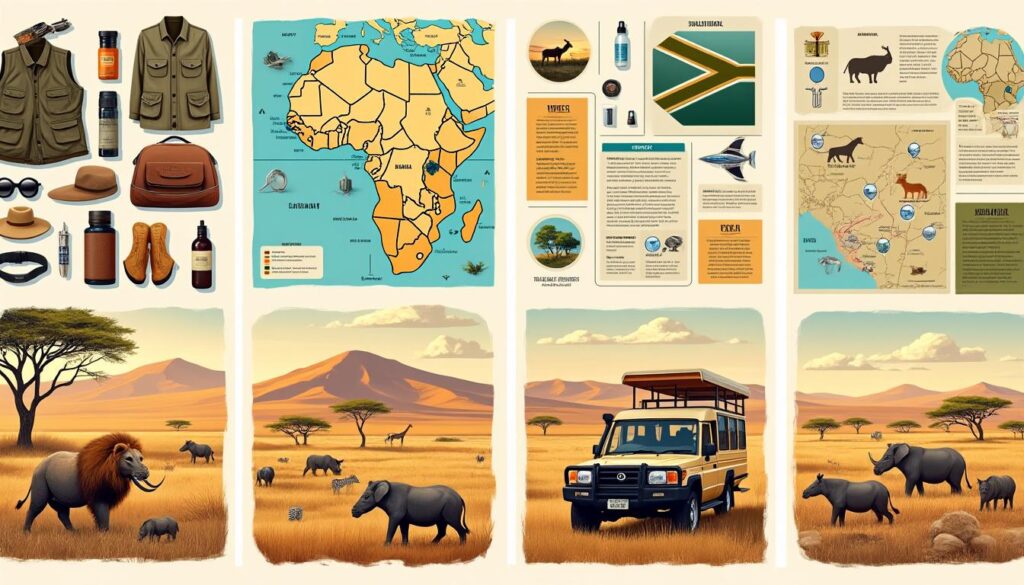
Embarking on a safari in Africa represents an unforgettable adventure, rich in encounters with wildlife and natural discoveries. Whether in Tanzania, Kenya, Namibia, or South Africa, each destination offers its share of breathtaking landscapes and iconic species. However, to fully enjoy this unique experience, careful preparation is crucial. From the right photography equipment to suitable clothing, not to mention toiletries and necessary medications, several essential steps must be followed to ensure a trip that is both comfortable and safe. By focusing on these elements, you can savor every moment of your journey, cradled by the sounds and scents of the wild.
The essential steps to follow to prepare a safari in Africa (Tanzania, Kenya, Namibia, South Africa…)
Preparing for a safari in Africa is an exciting adventure that requires organization. Whether you choose Tanzania, Kenya, Namibia, or South Africa, each destination offers its share of natural wonders. This guide will take you through the essential steps for an unforgettable journey.
Choosing the ideal destination
First and foremost, your destination is crucial. Each country has its particularities, landscapes, and wildlife. For example, Kenya is known for its vast savannahs and the migration of wildebeests, while Tanzania is home to the famous Serengeti National Park and the ascent of Kilimanjaro. In Namibia, you will discover stunning landscapes with the Namib Desert, and in South Africa, the richness of its national parks like Kruger.
When choosing, also consider the time of year! Some seasons are better for animal watching. The dry season, for example, often offers better visibility, as animals gather around water sources. Check the weather, local events, and safety conditions.
Establishing a budget
Establishing a budget is essential. The costs of a safari can vary significantly depending on several factors: accommodation choices, mode of transport, activities, and meals. For a luxury trip, expect a higher amount, while it’s possible to do a budget safari with thorough research.
It is advisable to include a buffer for unexpected expenses. A good idea is to consult specialized agencies to get estimates. Don’t forget to include visa fees, any necessary vaccinations, and travel insurance.
Planning your safari dates
Planning the dates is a key step in organizing your safari. It’s preferable to travel during the high season to maximize your chances of observing diverse wildlife. However, the low season can offer a different experience, often quieter and less crowded.
It is also wise to consult a migration calendar to choose the best period. Consider the organization time for bookings, as some periods are very popular. If you’re traveling in a group, coordinate everyone’s availability as well.
Checking the travel logistics
The travel logistics include several elements, such as flights, accommodation, and local transportation. Booking your flight in advance can save you a lot. After that, it’s important to choose suitable accommodation, which can range from camping to luxury lodges.
To move between different parks, consider renting a vehicle or booking transfers. Some safaris include all these options in an all-in-one package, which can greatly simplify your experience.
Packing your suitcase and equipment
A safari requires specific equipment. Be sure to bring suitable clothing, preferably in neutral colors so as not to scare the animals. Lightweight and breathable fabrics are recommended, especially for warm and sunny areas.
- Binoculars for observing wildlife from a distance
- A quality camera with a good lens
- A first aid kit and essential medications
- Insect repellent and sunscreen
Make sure to also bring enough water and snacks, especially for long excursions. Don’t forget to check the list of items to take, for any eventuality.
Learning about the wildlife and flora
Inform yourself about the wildlife and flora you may encounter during your safari. Each destination offers unique species. For example, Kenya is home to many predators, while Namibia is abundant in endemic desert animals.
Having a wildlife guide on hand can enrich your experience. Taking note of animal behaviors and the different species you encounter will make your adventure even more satisfying. Consider the implications of animal ethics during your observations as well.
Anticipating health needs
Going on safari involves anticipating your health needs. Inform yourself about the necessary vaccinations for the country you are visiting, and consider a medical consultation a few weeks before your departure. Bring a first aid kit with common medications and antibodies needed to prevent malaria, if that disease is present.
Don’t forget to account for hydration and nutrition. Drink plenty of water and eat balanced meals. Prepare to be exposed to intense sunlight, so regularly use sunscreen and wear a hat.
The essential steps to follow to prepare a safari in Africa
Preparing for a safari in Africa requires particular attention to detail to ensure an unforgettable experience. The first step is to choose your destination, whether it is Tanzania, Kenya, Namibia, or South Africa. Each of these countries offers unique national parks and exceptional wildlife watching opportunities. It is essential to research the best times to visit to maximize your chances of encountering wildlife.
Once you have chosen the destination, it’s important to plan your travel itinerary. This includes selecting lodges or safari camps, choosing activities (such as walking safaris or night safaris), and the duration of your stay. Also, think about logistics, such as transfers between various locations, which can influence the smooth running of your adventure.
Next, prepare your equipment. You will need to ensure you have the right photography gear to capture magical moments, as well as practical accessories like binoculars, a good pair of shoes, and clothing suited to the weather conditions. Also, consider a first aid kit and necessary medications, as safari areas may be remote from medical facilities.
Finally, take into account the administrative aspects of your trip: make sure your passport is valid, check visa requirements, and any necessary vaccinations before departure. By adhering to these essential steps, you ensure effective preparation for a safari rich in emotion and discovery at the heart of African nature.