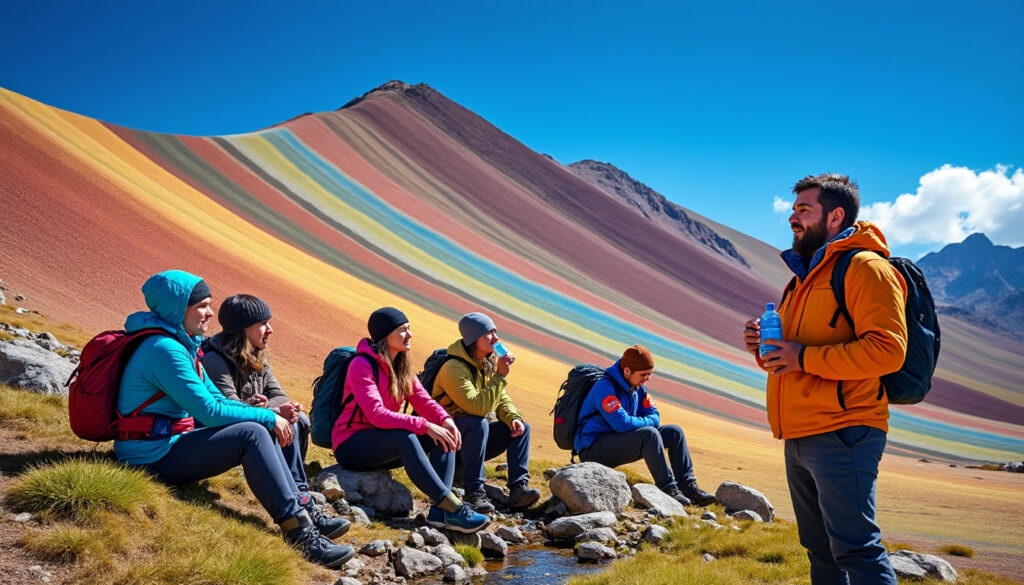
Welcome to the fascinating world of Vinicunca, the famous Rainbow Mountain of Peru, where breathtaking landscapes and vibrant colors amaze travelers from around the globe. However, before discovering this geological wonder, it is crucial to properly acclimate to the altitude. With its peak reaching 5036 meters, this adventure requires adequate preparation to avoid mountain sickness and fully enjoy your experience. In this article, we share essential tips for navigating serenely through this splendid ascent and savoring every moment in the heart of the Andes.
Preparing for Vinicunca requires paying special attention to climbing at high altitude. At 5036 meters, the effects of oxygen deprivation can be severe. This article offers practical and essential tips for acclimatization so you can fully enjoy this unique experience while minimizing risks associated with altitude.
Understanding the Importance of Acclimatization
Before embarking on the ascent of the colorful mountain, it is crucial to understand what acclimatization involves. Your body needs to adapt to an environment where oxygen becomes scarcer. Thus, maintaining your health should be your priority. Having a good level of acclimatization improves your performance. It will also allow you to appreciate the magnificent landscape of Vinicunca more fully.
The first few days spent in high-altitude areas, such as Cusco, are fundamental. This stage allows your body to gradually adapt. Do not neglect it. If you arrive directly at 5000 meters, you risk experiencing discomfort such as nausea or severe headaches.
It is recommended to spend at least two to three days in Cusco. Some people experience symptoms of mountain sickness, while others do not. Your fitness level, age, and even your general health will influence your acclimatization. Always listen to your body, especially if you experience symptoms.
Effective Acclimatization Strategies
Hydration and Nutrition
For your acclimatization, it is imperative to properly hydrate. Drink at least two to three liters of water per day. This simple action helps your body function better. At the same time, a balanced diet is equally essential. Prefer light meals rich in complex carbohydrates.
- Prefer fresh fruits like bananas or apples.
- Discover local dishes like quinoa or hot soups.
- Avoid alcohol and heavy foods that can burden your digestion.
Good nutrition contributes to your acclimatization while optimizing your energy. Remember that your body needs fuel to cope with physical exertion. As you approach 5000 meters, your body will thank you.
Relaxation and Breathing Techniques
In case of stress or fatigue, deep breathing techniques can help you. Take a few minutes to focus on your breath. Inhale deeply through your nose, then exhale slowly through your mouth. This helps reduce stress and brings oxygen into your system.
Also, incorporate breaks, as you will need them during the ascent. Walking at a leisurely pace allows your heart to adapt and your breathing to stabilize. Taking your time is of utmost importance.
When to Avoid the Ascent for Your Safety
There are moments when it is wise to assess whether you are ready to climb the mountain. Symptoms of mountain sickness can vary. If you experience severe headaches, extreme fatigue, or persistent nausea, know that these signals should not be ignored.
People with medical histories, particularly those with heart or lung conditions, should exercise particular caution. Always consult a doctor before departing if you have any doubts about your physical condition. Additionally, use common sense and if the weather is particularly bad, postpone the ascent.
Assessing Your Physical and Mental Condition
A prior assessment of your physical condition is necessary before thinking about the ascent. If you are not an experienced hiker, it may be relevant to choose a gentler option. Sometimes, quad excursions or horseback rides can make this experience accessible. These choices will help you reach heights without excessive exhaustion.
Do not underestimate the psychological impact of hiking at altitude. Keep in mind that your mental state must be prepared. Visualize your summit, stay positive; this can help overcome difficult moments.
Key Takeaways for an Experience at Vinicunca
In conclusion, your ascent to Vinicunca must be carefully prepared. Follow the acclimatization steps, stay hydrated, maintain good nutrition, and assess your limits. Experiencing this unique Andes journey is a privilege, but it is imperative to do so safely. Stay attuned to your body and feel free to take breaks. If you take care of yourself, you will leave with unforgettable memories. Who knows, it could ignite your passion for adventure at altitude.
Before undertaking the ascent to Vinicunca, it is crucial to properly acclimatize to the altitude to avoid the discomforts associated with mountain sickness. Indeed, this colorful wonder is situated at over 5,000 meters, and every traveler, even the most seasoned, must pay attention to their body.
First, it is recommended to spend 2 to 3 days in Cusco, which is already at 3,400 meters. This period will allow your body to gradually adapt to the decrease in oxygen. During your stay, prioritize hydration by drinking mineral water and consuming coca tea, traditionally used to combat soroche.
Another essential aspect is to remain attentive to your pace during the ascent. Walking slowly and taking frequent breaks helps preserve your energy and decrease the risks of unpleasant symptoms. Also, consider bringing energy snacks, which will allow you to recharge while admiring the breathtaking landscapes of the Andes.
Always listen to your body! If you experience worrying signs such as severe headaches, nausea, or excessive fatigue, do not hesitate to descend or seek help. Finally, be aware that the weather can change rapidly at altitude. Therefore, bring suitable clothing to withstand the cold while remaining comfortable during this incredible adventure.