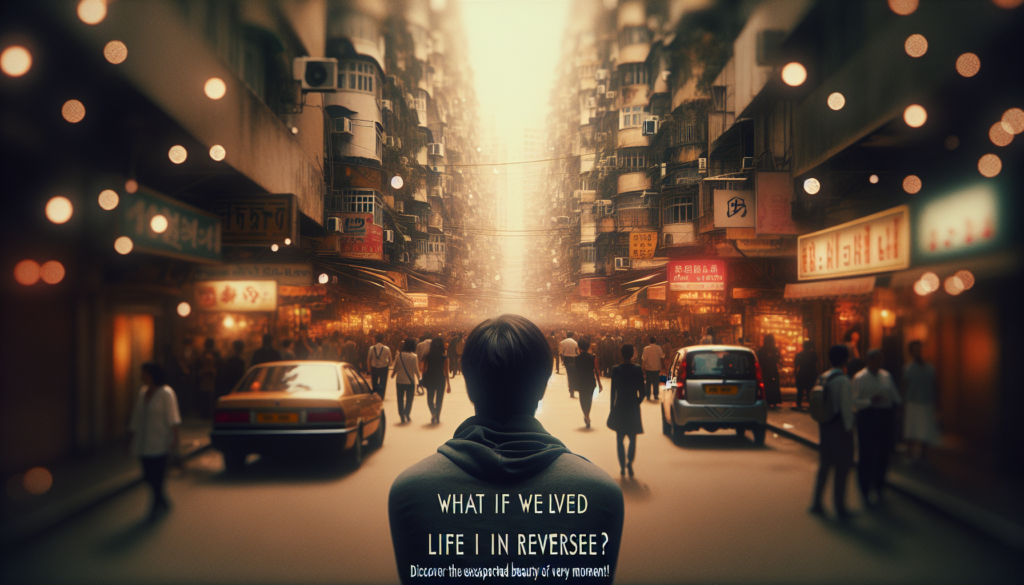
Alain Jessua, filmmaker singular of French cinema, marked his era with his approach bold And visionary contemporary themes. With his film “Life in reverse”, it exposes a social and introspective decline, exploring the twists and turns of the human soul through the eyes of Jacques Valin, a man in search of meaning in a society imbued with consumerism and illusions. Through bold narrative choices and staging elegant, Jessua manages to convey profound reflections on the human condition, while painting a portrait ironic And satirical of his time.
Alain Jessua, an extraordinary director, left his mark on the French cinematographic landscape with films such as “L’Existence à Rebours”. This feature film, beyond being just a simple work, offers a true reflection on the human condition and the paradoxes of modern life. Through bold storytelling and evocative characters, Jessua paints a gripping portrait of a society plagued by its own contradictions. This article explores the essential themes, characters and aesthetics that characterize this unique work.
Alain Jessua: an unclassifiable artist
Alain Jessua is much more than just a director. With his limited but striking filmography, he is part of a French cinematographic tradition which challenges established norms. His films are often described as experiments where the surrealism mixes with realism. Born in 1932, he first worked as an assistant on notable productions before launching into directing. By working on more modern and daring works, Jessua attempts to paint a faithful but distorted picture of society. His approach has earned him a loyal, if small, following.
The themes of the absurd and solitude are recurring in his works, reflecting a disenchanted vision of existence. In “Existence in Rebours”, he addresses the complexity of human relationships and the unrealistic expectations that everyone can set for themselves. These elements make it possible to establish a deep connection with the viewer, shared between laughter and melancholy.
An exploration of the human condition
At the heart of “Existence in Rebours”, the characters live a reality where the absurd is king and the quest for meaning seems vain. The story follows a protagonist in crisis, whose search for authenticity confronts him with tragico-comic situations. The misadventures of this character reflect the uncertainties of the modern era. In this context, the film becomes a metaphor for the human struggle against dehumanization, alienation and false pretenses.
Jessua uses crafted dialogues, often marked with irony, to reveal the depth of his characters. The interactions, far from being superficial, are charged with contradictory emotions. They show how everyone juggles with their past and their aspirations. Thus, these exchanges make it possible to enrich the complexity of the work and to give a voice to those who are often not heard.
Aesthetics and bold narrative choices
Visually, “L’Existence à Rebours” stands out with photography that captures the very essence of human emotions. The framing, often very well thought out, creates unique atmospheres. The nuances of light and shadow reflect the inner conflict of the characters, giving an additional dimension to the story. Jessua plays on contrasts not only of light, but also of feelings.
The editing, always daring, reflects this approach. Thus, the sequences sometimes come together in unexpected ways, adding to the feeling of unreality. The construction of the story thwarts the viewer’s conventional expectations, immersing them in an immersive experience. These choices are not trivial, they reflect the unique vision of Jessua, who wishes to provoke reflection on our relationship to the world.
A society prey to its contradictions
“Existence à Rebours” takes a critical look at contemporary society, oscillating between aspirations of happiness and tragic reality. The characters are not only individuals in search of meaning, they also symbolize an entire generation facing existential dilemmas. This tension is palpable in each scene, where daily rituals are scrutinized in detail.
Conclusion on the legacy of Alain Jessua
Through his work, Alain Jessua invites introspection on identity and the meaning of life itself. Through “L’Existence à Rebours”, he offers a timeless reflection, still resonating today. His unique voice continues to inspire and spark debate, testifying to the importance of his cinematic legacy. Far from being just an individual adventure, this film questions the human experience with subtlety and depth.
|
IN BRIEF
|
Alain Jessua, an emeritus director, has left his mark on French cinema with his unique and daring approach. His feature film “ Existence in Reverse » presents itself as a profound exploration of human nature and its limits in a consumerist society. In this film, Jessua confronts the viewer with a sometimes disturbing reality, highlighting the emptiness of existence through the prism of characters in search of meaning.
Throughout the work, the protagonist, similar to a modern-day stroller, navigates between existential choices and the constraints of a world that only offers illusions of happiness. This character perfectly illustrates the feeling of alienation and disenchantment that awaits everyone in a society obsessed with material success. Jessua, with her sharp gaze, highlights this modern loneliness and the way it manifests itself in interpersonal relationships. The dialogues, often disembodied, demonstrate superficial communication, revealing the absence of a real human connection.
Through ” Existence in Reverse », Jessua stands out not only for her unique vision, but also for her narrative style. Aesthetic choices, such as the use of careful framing and a photograph in shades of gray, reinforce the melancholy and disenchanted atmosphere of the story. The staging, far from being classic, invites reflection on the human condition and on what it means to live fully in a world where everything seems preformatted.
Ultimately, this work becomes a poignant metaphor for the search for a balance between the real and the imaginary, leaving the viewer with a fundamental question: how to navigate the twists and turns of an existence in reverse, where every choice seems to be determined by external forces, but where the quest for oneself always remains possible?