
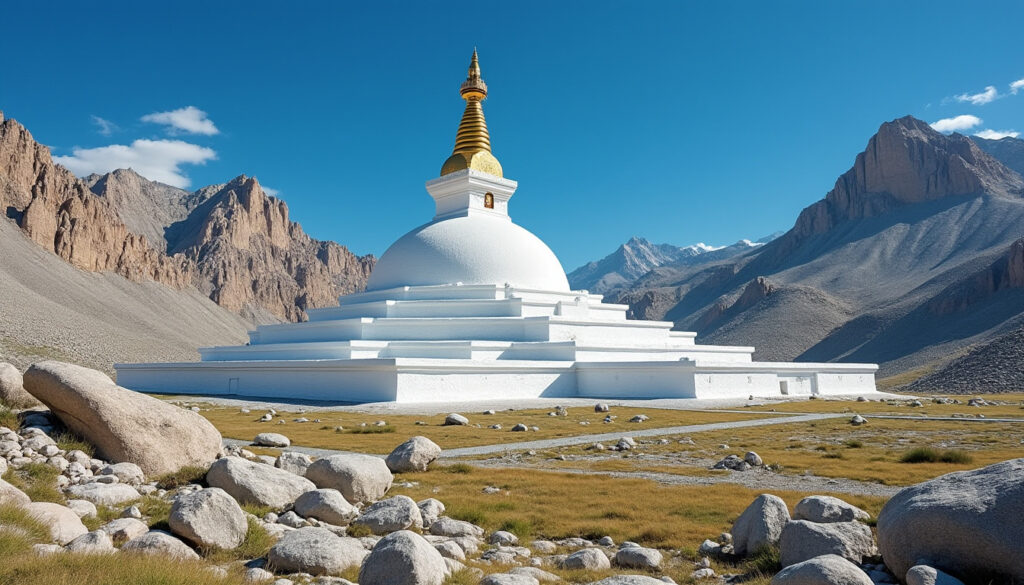
The Tsagaan Suvarga, dubbed the white stupa, is one of the most impressive geological wonders of Mongolia. Located in the Gobi Desert, this spectacular site features dizzying cliffs 60 meters high, offering a stunning panorama of colorful strata that testify to 10 million years of history. Eroded by the wind, the white stupa evokes majestic landscapes, sometimes compared to a mini Grand Canyon, and represents a true treasure for nature lovers and hikers. Nearby, the remnants of an ancient seabed and the presence of camels further add to the charm of this must-visit place.
Tsagaan Suvarga, often referred to as the white stupa, is a natural wonder of breathtaking beauty, nestled in the heart of the Gobi Desert in Mongolia. This exceptional site showcases spectacular rock formations that testify to a rich geological history while offering a breathtaking view. Throughout this exploration, you will learn more about the unique features of this place, its fascinating history, the biodiversity surrounding it, as well as the unforgettable experiences it offers to visitors.
An astonishing panorama and a rich geological history
The white stupa is a limestone formation, both sandy and clayey, reaching an impressive height of 60 meters. Extending over a length of 400 meters, its steep slopes are adorned with colorful shades, reflecting an age of about 10 million years. These colorful stripes reveal the site’s history, with each layer telling a distinct era.
Located 419 kilometers southwest of Ulaanbaatar, Tsagaan Suvarga is situated southeast of the sum Ölziit, at the southern border of the province of Dundgovi. To easily find it, you can consult a map indicating its location in the vast Gobi Desert. This geological beauty has captivated nature lovers with its unique formations.
Unforgettable landscapes
Observing these dizzying cliffs, one can see an old stūpa, a symbolic Buddhist pagoda. The pastel shades of the white stupa—red, beige, orange, and violet—create an enchanting spectacle, especially at sunrise and sunset. Furthermore, the shape of the cliffs may evoke a frozen waterfall or even a ruined city, thus offering a rich and intriguing visual experience.
This fascinating site is sometimes described as a mini Grand Canyon, attracting hiking and photography enthusiasts. The trails winding around the rock formations are as splendid as they are frightening. Getting close to the edge provides unique sensations, a true mix of excitement and wonder.
A rich ecosystem and astonishing biodiversity
Millions of years ago, this region was covered by water, creating a dry seabed. This geological history has preserved numerous fossils, testimony to a time when dinosaurs dominated the landscape. Today, the site is famous for its fossil richness, attracting researchers and enthusiasts eager to explore these buried treasures.
Nearby, visitors may encounter camels searching for saxaoul, the emblematic plant of this desert region. This plant is a precious source of hydration, as its roots store water. An encounter with these sedentary animals and their natural habitats is a memorable experience.
Explore the caves and meet the nomads
Not far from the white stupa stands the mountain Ulaan Suvarga, known as the red stupa for its vibrant colors. To the east, the Khevtee Bosoo Agui offer a network of fascinating caves to explore. These caves, whose name means “the stretched and standing caves”, are accessible through various passages, but beware of the bats residing there.
Meeting the nomadic goat herders is another enriching aspect of this adventure. After a trip in the desert, spending the night in a yurt, where you can enjoy traditional dishes such as meat dumplings, will immerse you in the local culture. These authentic culinary experiences further enrich your exploration of the region.
How to get to the white stupa?
The best way to discover the Gobi Desert is to plan a road trip in Mongolia. Travel agencies often offer tours in Russian vans that facilitate access to enchanting sites like Tsagaan Suvarga. Experiencing camping in this majestic setting, under a starry sky, remains a memorable adventure.
Once on site, the magic happens. Sleeping in a tent amidst grand landscapes offers a sense of freedom and wonder, an opportunity to disconnect from daily life. It’s a fascinating journey that you will cherish forever.
To learn more about exploring the Gobi Desert, feel free to check this link: Explore the Gobi Desert.
Tsagaan Suvarga, often referred to as the white stūpa, represents a geological marvel at the heart of the Gobi Desert in Mongolia. These rock formations, both spectacular and majestic, rise 60 meters high and extend over more than 400 meters long. Their 10 million year history is certainly one of the most captivating aspects, offering visitors a glimpse into different eras, thanks to the vibrant color palette overlapping in their layers.
As one approaches the cliffs of Tsagaan Suvarga, one is quickly struck by their beauty. The pastel hues of the rocks, blending red, beige, orange, and violet, pay homage to nature, as the wind has eroded these formations, transforming them into works of art. From afar, their silhouette evokes a mini Grand Canyon or even a ruined city, further enhancing their appeal. The hikes through these dizzying landscapes offer unprecedented sensations, a way to truly connect with this unique environment.
The site also bears witness to a paleontological richness, recalling a time when what is now the white stupa was at the bottom of the ocean. Fossils and shells of the creatures that evolved there can still be found. The immersion in this wild corner is intensified by encounters with nomadic families, who live from herding, providing a glimpse into local culture and food traditions, particularly through their homemade yogurts and cheeses.
For those looking to discover Tsagaan Suvarga, a journey through the Gobi Desert is an unforgettable experience, whether through camping under a starry sky or immersing oneself in the lives of nomadic families. It is impossible to leave this place without being amazed by the raw beauty and natural heritage it embodies.


