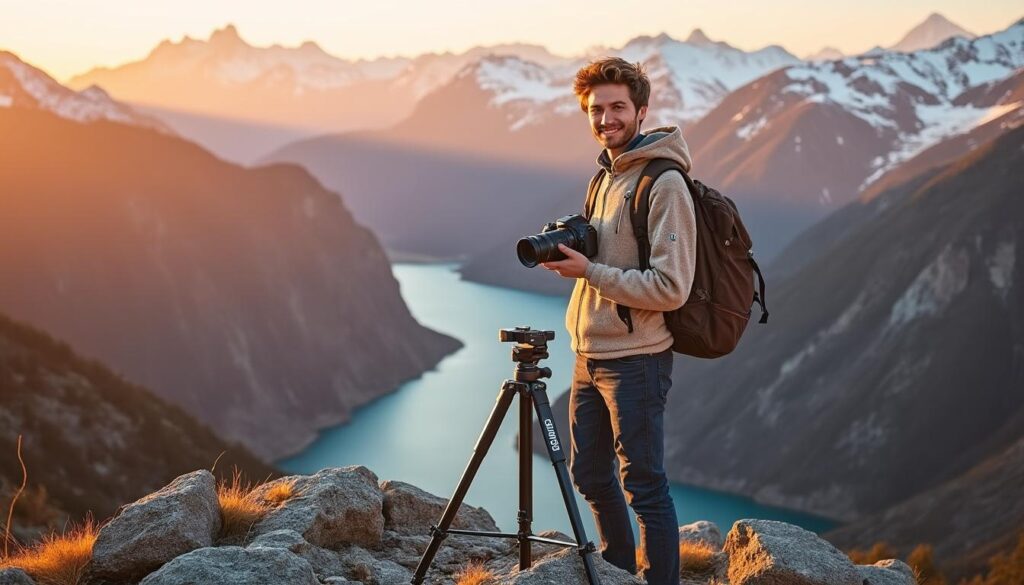
Whether you’re venturing into far-off lands or exploring local landscapes, photography becomes an ideal way to capture and share your memories. If you’re a beginner, armed with your first camera, you might feel overwhelmed by a multitude of buttons and settings. However, with some basic knowledge, you can quickly learn to master your new equipment and immortalize your travel experiences. Let’s dive into the fundamentals of photography to help you make the most of your visual adventure.
Introduction to Travel Photography
Diving into photography while traveling can seem daunting, especially if you are new to the field. With a camera in hand, it’s easy to feel apprehensive about all those buttons and functions. Luckily, by learning the basics, you’ll be able to capture precious moments without stress. This article will guide you through the essential elements to start your photographic journey, from equipment to technical approaches.
Choosing the Right Equipment for Travel
The choice of your camera is crucial. To get started, it’s best to opt for a model that allows you to learn without feeling overwhelmed by technicalities. Bridge cameras represent an excellent compromise. They combine ease of use with satisfactory image quality. The Kodak Pixpro is an affordable option to consider, and the Lumix FZ330 offers higher quality, perfect for a successful trip.
When traveling, the weight and size of your camera matter. A compact camera or bridge is ideal to avoid unnecessary burden. Be sure to also bring a lightweight tripod, which can be useful for long exposures, especially when capturing landscapes.
Having a good bag to transport your photographic equipment will make your task easier. Consider investing in a suitable carry bag. This will protect your gear from shocks and weather conditions.
Understanding the Technical Basics
How a Camera Works
To begin, learn how a camera works. It’s quite simple to understand. Light enters through the lens and is directed towards a sensor. This sensor is key to capturing images. The aperture (or iris) determines the amount of light that reaches the sensor, playing a crucial role in the quality of your photos.
Another essential concept is depth of field. It is the area that will appear sharp in your image. For example, a wide aperture (small f/ number) reduces the depth of field, enhancing the blur in the background, perfect for portraits.
Next, ISO sensitivity affects your ability to photograph in low light conditions. A higher ISO allows you to capture more light, but be cautious of digital noise that can distort the image.
Exposure Settings
Understanding how to execute exposure is fundamental. It is the result of a balance between aperture, shutter speed, and ISO sensitivity. Shutter speed affects the sharpness of the image. A fast shutter speed is ideal for freezing a moment, while a slow speed can bring out movement, perfect for creative shots.
To master exposure, try shooting in different lighting conditions. Explore the outdoors at different times of the day and familiarize yourself with your camera. This will help you find the right balance and understand how these settings interact.
Composition Rules for Captivating Photos
Photographic composition is crucial. Using the rule of thirds can transform your photos. Mentally divide the image into three equal parts and position the main elements along these lines for better visual balance. This doesn’t mean you should limit yourself to it, but it’s a good starting point.
Leading lines add dynamism to your images. They guide the viewer’s gaze through the photo, creating a sense of depth. Another tip is to incorporate elements in the foreground to enrich the background. This offers a sense of visual richness.
- Symmetry draws the eye.
- Vary your shooting perspectives.
- Do not neglect the background.
Think carefully about your viewpoint before pressing the shutter. This will dramatically influence your composition.
Tips for Practicing Photography While Traveling
Getting started in travel photography requires practice. Take your camera everywhere you go. Photograph every interaction, every landscape, and every moment of life that comes your way. Don’t be afraid to repeat shots from different angles. Over time, you will develop your style. The variety of subjects will enrich your vacation album.
Draw inspiration from photographers you admire. Study their work and try to understand their approach. This will fuel your creativity and provide you with many ideas for capturing unique images.
Finally, dare to play with the manual settings of your camera. Step away from automatic mode, unleash your creativity, that’s where the magic happens. Experiment with aperture, shutter speed, and ISO sensitivity. Experimentation will make your experience enriching.
Equipped with all the necessary advice, you are ready to dive into photography during your travels. Once you have absorbed these basics, your environment will become a canvas to explore and capture. Take your time, have fun, and each photo will become as much a story as a precious memory to share.
Traveling with a camera in hand can be a rewarding and memorable experience. To get started in photography and capture beautiful memories, it is essential to understand the foundations that underpin this practice. First, it is important to choose a type of camera suited to your skill level. The bridge, for example, is an excellent choice for beginners, as it combines advanced features while being easy to carry.
Next, it is crucial to master key concepts such as aperture, shutter speed, ISO sensitivity, and white balance. These settings determine the quality of your images and help you understand the effect of different lighting conditions on your shots. By exploring the different modes of your camera, such as aperture priority or shutter priority, you can begin to experiment and develop your own photographic style.
Beyond technical settings, it is equally important to integrate composition rules into your work. The Rule of Thirds, symmetry, and the use of viewpoints enrich your images and guide the viewer’s gaze. Take the time to observe your surroundings and capture unique angles. Regular practice in photography is essential for your progression. The more you photograph, the more familiar you become with your camera and the various settings.
In summary, travel photography becomes both accessible and exciting as you equip yourself with fundamental knowledge and practice. All you need to do is embark on the adventure and fill your photo album with unforgettable memories.