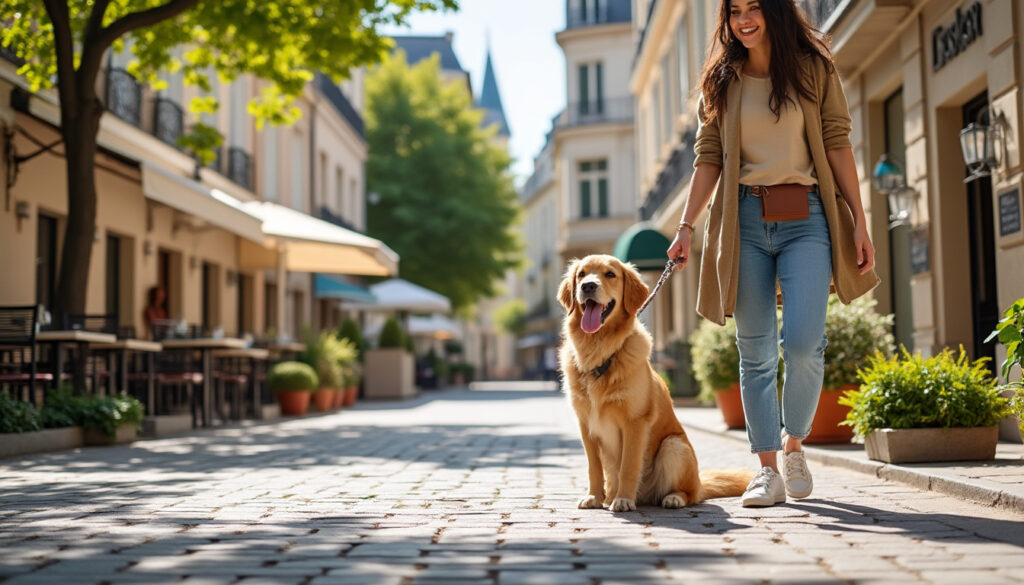
Traveling with your dog requires a bit of organization, but some French cities greatly facilitate the getaway thanks to their pet-friendly accommodations and walking areas. Municipalities of a manageable size such as Thionville, Vichy, or Chalon-sur-Saône stand out for their hospitality and pretty natural spots.
Choosing a destination to travel with your dog is not just about finding a roof where they are accepted: you also need to consider walks, shaded areas, and breaks by the water. A study by Gîtes.fr, based on more than 80,000 accommodations in 50 municipalities, highlights medium-sized cities that are particularly welcoming. Thionville, Vichy, and Chalon-sur-Saône rank at the top of the list. Here’s how to spot the most suitable destinations and prepare a pleasant stay for the whole family.
The answer often lies far from the large metropolises. According to the data studied, 25.1% of French accommodations accept animals, but this average hides significant disparities from one municipality to another. Some cities thus offer much more possibility than others to book without leaving your companion at home.
The capital, for example, ranks 49th, with 20.1% of accommodations open to animals. In contrast, the municipalities at the top of the rankings approach or exceed 40% of suitable offers. This ranking provides a good starting point, to be complemented by checking the specific rules for each accommodation and the places where dogs are allowed.
What the ranking of welcoming cities reveals
The analysis is based on a large sample of rentals spread across fifty French municipalities. Its main lesson is quite clear: medium-sized destinations often perform better than very large cities. They can combine a welcoming accommodation offer with a more easily accessible environment for daily outings.
A high percentage does not guarantee that every accommodation accepts all dogs, regardless of their size or habits. Conditions can vary: extra charges, number of animals allowed, access to certain rooms or rules regarding common areas. Therefore, it is best to directly ask the host the essential questions before confirming a reservation.
The charm of a getaway is not measured solely by the number of favorable listings. A dog will need regular walks, places to rest, and a route adapted to the family’s pace. The proximity of a park, a towpath, or a trail can turn an ordinary stay into a real breath of fresh air.
The podium of particularly dog-friendly destinations
Thionville ranks first with 53.8% of accommodations accepting animals. This Moselle city combines this result with a setting conducive to walks, between forest, marked paths in the Thionville woods, and routes along the Moselle. This allows for a mix of urban discoveries and pauses in nature.
Vichy occupies second place: 45.5% of its accommodations are favorable to travelers accompanied by an animal. This spa town offers shaded parks and developed banks around Lake Allier. Walks can thus feel like a peaceful interlude, among open landscapes.
Chalon-sur-Saône completes the trio with 44.7% of adapted offers. Its quays allow for walks along the Saône on accessible paths, while the nearby countryside provides another backdrop within reach. It’s an interesting stop for those who enjoy walks by the water as much as excursions in the vicinity.
Several other municipalities also stand out in the ranking. Metz shows 44.3% of welcoming accommodations, ahead of Clermont-Ferrand at 40.9% and Grenoble at 40.2%. These cities can suit different styles of stay, provided you check the outing possibilities around the chosen accommodation.
Thionville, between forest and waterway walks
In Thionville, the welcome of animals is reflected in an offer of particularly favorable accommodations. With more than one listing out of two open to dogs according to the study, the search for a place to stay can seem less burdensome than in many other municipalities. However, it remains useful to confirm the details before leaving.
The Thionville woods and its marked trails invite you to slow down, to sniff every turn, and to take the time for a real walk. The towpaths along the Moselle offer another atmosphere, more open and conducive to quiet strolls. Be sure to adjust the duration of the outing to your companion’s fitness level and the day’s weather.
To create a balanced itinerary, alternate between explorations and resting moments. A morning outing, a cool break during the hottest hours, and then an evening walk can suit many dogs. Keep a reserve of water handy, even when the itinerary follows a river.
Vichy, a peaceful getaway between parks and banks
Vichy charms with its green spaces and the atmosphere of a spa town. The shaded parks, inherited from the Belle Époque era, provide a pleasant setting for leisurely walks. Before accessing them, be sure to check the local rules: some areas or events may impose restrictions.
The developed banks of Lake Allier allow for varied walks and enjoyment of an open backdrop. Along the route, changes in scenery stimulate the dog’s curiosity while allowing everyone time to catch their breath. An appropriate leash and a few pauses make the discovery more comfortable, especially during a first visit.
The city can also suit a quiet stay, punctuated by short outings rather than long hikes. Choosing accommodation close to walking areas limits travel and makes the animal’s routine easier. This practical detail matters greatly after a day of sightseeing.
If your itinerary includes tourist attractions, inquire in advance about dog access and any specific guidelines. Not all establishments that welcome the public follow the same rules. A flexible itinerary allows you to enjoy the destination without multiplying last-minute changes.
Finally, the proximity of water calls for caution: not all dogs feel comfortable approaching or swimming. Keep your companion under control and respect designated areas. A successful walk does not need to be spectacular; it should primarily suit their pace.
Chalon-sur-Saône and other good options
In Chalon-sur-Saône, the quays along the Saône offer a pleasant route to stretch their legs. The proximity to the countryside allows urban walks to be complemented by outings in a more open setting. Before exploring the surroundings, check the access and rules applicable to the chosen natural areas.
Metz can also capture attention, with 44.3% of animal-friendly accommodations in the studied ranking. To organize your outings, it’s wise to identify parks and accessible paths near your accommodation. The location of the rental can sometimes matter as much as its level of amenities.
Clermont-Ferrand and Grenoble are also among the well-placed municipalities, with respectively 40.9% and 40.2% of favorable offers. Their environment can appeal to outdoor enthusiasts, but concrete possibilities depend on the neighborhood and the season. Check accessible routes before building an entire itinerary around a hike.
To compare these destinations, look beyond the displayed number. The distance to walking areas, the presence of a water point, and the ease of accessing shops can make a real difference daily. A welcoming city is also a destination where a dog’s needs naturally integrate into the stay.
The access rules deserve special attention in each municipality. A park may allow dogs on a leash but prohibit their presence in certain areas or at certain times. Check the posted signs and adhere to the guidelines to ensure the spaces remain pleasant for everyone.
Preparing a smooth stay with your companion
The first step is to define your dog’s rhythm and needs. An older dog, a puppy, or a very energetic companion will not have the same expectations for walks and rest periods. Taking these factors into account helps choose a city, a neighborhood, and an accommodation that are truly suitable.
When booking, ask if there are any extra fees and if amenities are available. Also verify the rules regarding absences, common areas, and any size limits. It is better to obtain these details before departure than to discover an unexpected condition upon arrival.
Identify walking possibilities around your chosen address. A dog-friendly park, a shaded trail, or a developed path along the water can simplify daily outings. If the accommodation is far from these areas, plan for travel time in your itinerary.
Preparing your pet’s belongings makes the journey more peaceful. Bring their usual food, a bowl, a comfortable leash, poop bags, and a familiar object. This little piece of home can help them regain their bearings in a new environment.
Once there, give them time to explore the place without rushing. The sounds, smells, and movements of an unfamiliar city can be stimulating, even tiring. Gradual outings and regular breaks help them settle in, especially during the first few days.
Finally, maintain some flexibility in your schedule. Too hot weather, a closed path, or a dog that needs rest can change plans. Planning alternative activities and respecting your companion’s needs allows for more serene travel, city by city.
Traveling with your dog: choosing a city that truly welcomes them
Traveling with your dog requires a bit of organization, but the choice of destination can turn the preparations into a promise of adventure. In France, medium-sized cities often prove particularly welcoming: they combine an offer of animal-friendly accommodations with spaces where it’s nice to get some fresh air. According to the mentioned ranking, about one in four accommodations accept four-legged companions, with significant disparities between municipalities.
Thionville stands out at the top, with more than half of its accommodations accessible to travelers with an animal. Its towpaths, trails, and proximity to the forest offer great opportunities to vary walks. In Vichy, the shaded parks and banks of Lake Allier invite you to slow down. Chalon-sur-Saône, on the other hand, allows for long walks by the water and the nearby Burgundy countryside. Metz, Clermont-Ferrand, and Grenoble are also among the destinations to consider.
When booking, it’s best to verify the welcoming conditions of each accommodation: some accept dogs without restrictions, while others specify a maximum size, extra fees, or particular rules. Also identify allowed green areas, water points, and shaded routes nearby. These details, easy to anticipate, facilitate your days and allow you to adapt outings to your companion’s temperament.
A successful getaway is not only measured by the number of sites visited. It is also built through pauses, new scents, and paths traveled together. By choosing a city where adapted accommodations and walking spaces complement each other, you will be able to plan a stay at your own pace, between urban discoveries and big breaths of fresh air.