The UK Games Expo, the largest British convention dedicated to tabletop games, now prohibits games created by artificial intelligence. An exception remains for limited uses, such as minor editing, production assistance, or accessibility.
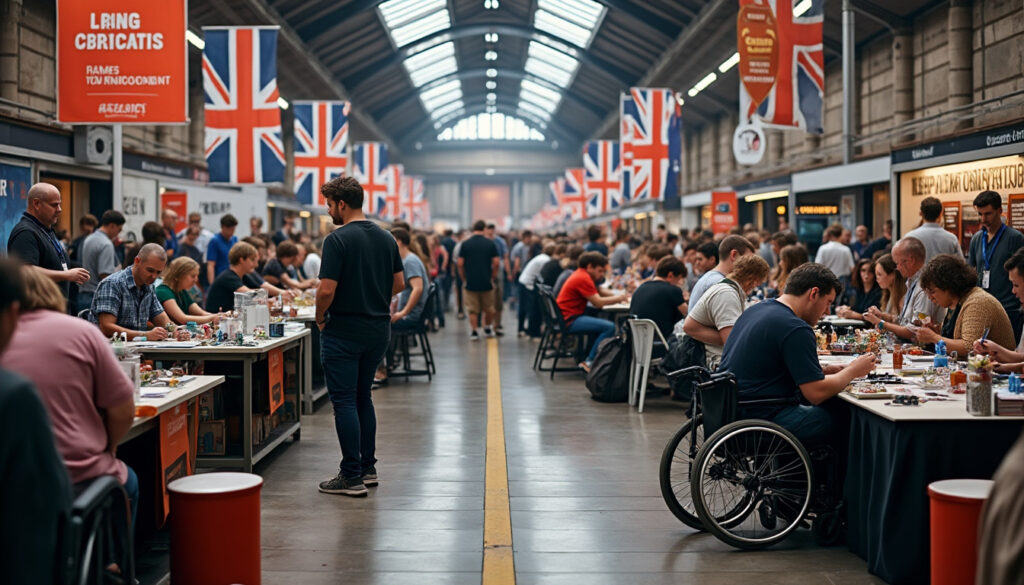
In Birmingham, the UK Games Expo is taking a stronger stance against games created with artificial intelligence. Exhibitors will generally no longer be able to present or sell such creations at the event. However, there is some tolerance for certain limited uses, particularly production assistance, accessibility, and minor edits. Held every summer in Birmingham, the UK Games Expo is a major gathering for board gaming in the UK. Since its inception in 2007, the event has brought together publishers, independent creators, retailers, and enthusiasts around board games, role-playing games, and imaginary worlds. Therefore, its decision carries weight beyond the aisles of the event. It sends a clear signal to an entire industry: the role of generative AI in displayed works is now subject to explicit rules. The new policy gives organizers the power to request the removal of affected items. In case of refusal, they can close the implicated booth and exclude its manager from future editions. This measure transforms a position into a concrete mechanism, applied directly on the ground. Exhibitors will therefore need to verify the origins of their visuals and content before booking their place. This shift follows several complaints directed at the event regarding its past proximity to AI-related projects. Visitors and community members expressed their discomfort with creations they deemed mass-produced or insufficiently transparent. The presence of vendors offering such items had also sparked discussions. For creators who handcraft their works, this coexistence could blur the recognition of their labor. In 2025, the convention was also criticized after the promotion on social media of Gates of Krystalia, a game associated with artificial intelligence. The matter rekindled questions about how the event supported certain projects. The new policy marks a notable change from that period. It aims to reassure exhibitors and the public without leaving the event teams unarmed in the face of contested situations. The decision brings the UK Games Expo closer to international conventions that have also chosen to restrict AI-generated works, notably Gen Con. This evolution reflects a difference in sensitivity between various branches of entertainment. While large video game companies and media are eager to explore AI, a significant part of the tabletop gaming community is more cautious. Here, objects, illustrations, and creative work are often experienced just centimeters away, directly on a table. The prohibition is not absolute. The regulation provides an exception for minor uses, as well as for production or accessibility assistance. This nuance allows distinguishing a game whose creative elements are generated by AI from a tool used in support of a secondary stage. However, the exact boundary will depend on how the organizers interpret the rules on-site. This distinction raises practical questions for creators. Is light editing acceptable if it alters an illustration? At what point does software assistance become a central creative contribution? Exhibitors may need to document their process, specify the tools used, and prepare clear explanations. Transparency could become as essential as formal compliance with the regulations. Tabletop games have a unique relationship with their physical components. A figurine, an illustrated card, or a board are not just functional elements: they contribute to the atmosphere and identity of the work. Hand-drawn goblins and small sculpted creatures give a tangible texture to imaginary worlds. For many players, discovering these details is part of the joy of the convention. This is also why the argument of cost reduction does not necessarily convince everyone in this sector. Some leaders in the video game industry hope that AI can reduce development expenses or staffing needs. In contrast, many figures in the board game space advocate for an approach where the uniqueness of human work remains visible. This preference does not mean that all technology is rejected, but that its use can be evaluated based on its influence on creation and production. Games Workshop, the company behind Warhammer, has thus prohibited its employees from using AI in their creative process. This rule has not prevented controversies: accusations of using these tools have nonetheless circulated. This example illustrates the difficulty of establishing a clear line and ensuring its application. A written policy clarifies expectations, but it does not alone end debates about the origin of images or texts. The choice of the UK Games Expo may also encourage other conventions to clarify their own exhibition conditions. Independent authors, small publishers, and illustrators often seek to know what type of assistance is allowed before presenting a project. Clear criteria can avoid unpleasant surprises when setting up booths. They also help visitors better interpret the information provided about the games they discover. In the broader gaming universe, digital tools are also shaping rules, interactions, and the way a game is told. For another perspective on the design of game mechanics and reactions to policing in a virtual world, one can explore this approach mentioned around GTA 6. The stakes are not the same as those of a board game convention, but they remind us that design choices profoundly influence the audience’s experience. In both cases, technology is not just a matter of efficiency: it also alters the relationship between creators, works, and those who discover them. For now, the British line is therefore restrictive but nuanced. Games fully created by AI will not be able to take place at the event, while certain occasional aids remain permitted. The practical application of this exception will be crucial to avoid misunderstandings between organizers and exhibitors. As the next editions approach, creators will need to navigate a now-central demand: to be able to clearly explain how their game was conceived.A strict rule, with authority to intervene at the event
A change driven by criticism of previous editions
Limited uses that remain authorized
A debate where craftsmanship occupies a special place
A new framework for game creators
By excluding games entirely generated by artificial intelligence, the UK Games Expo sends a strong signal to the entire sector. This decision addresses the concerns of visitors and professionals who wish to be able to distinguish human creations from automated productions. In a universe where illustration, writing, and rule design give a unique identity to each game, the question of the origin of content has become difficult to ignore.
However, the new rule does not mean that all use of AI will be dismissed. Organizers plan to allow for limited tasks, such as minor editing, production assistance, or certain improvements related to accessibility. The boundary thus lies between a temporary assistance tool and a work whose essential elements would be generated by a machine. This distinction places a significant responsibility on exhibitors: to be able to clearly explain their creation process.
At the event, the application of this policy could have concrete consequences. Organizers reserve the right to request the removal of affected products and, in case of refusal, to close a booth or exclude an exhibitor from future editions. This power underscores the importance placed on adherence to the rules, but also raises practical questions: how to assess the use of AI, what evidence to request, and how to handle ambiguous situations? Clear communication will be essential to avoid misunderstandings.
For independent creators, this evolution could enhance the value of artisanal work and transparency. Visitors will be able to interact directly with the teams, discover the artistic choices behind a universe, and support projects whose processes resonate with them. At the same time, digital tools will continue to evolve, and conventions will need to find criteria capable of keeping pace with these changes without conflating technical assistance and automated creation.